
Gasless MIG Welding: Is It Any Good?
Gasless MIG welding uses self-shielded flux-cored wire instead of a gas cylinder. Learn how it works, where it shines, its drawbacks and how to set it up.

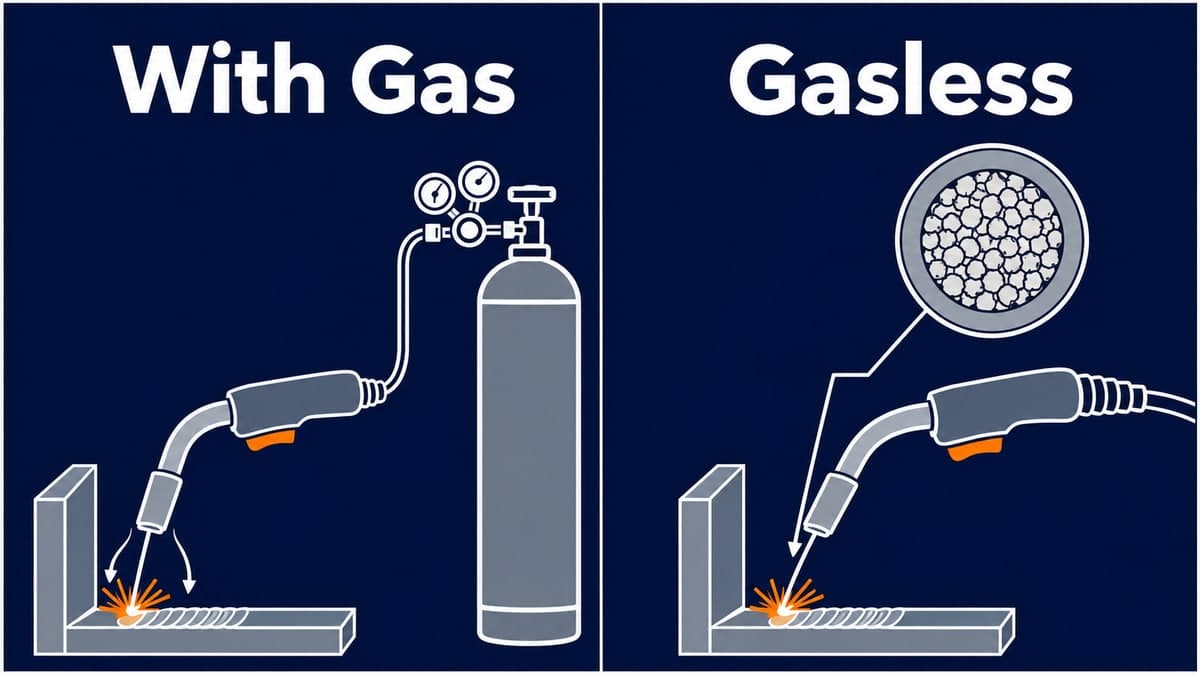
Gasless MIG welding is the popular name for running a MIG-style wire-feed machine with self-shielded flux-cored wire instead of solid wire and a gas cylinder. Technically it is not MIG at all, because there is no shielding gas supplied from outside. The wire itself carries everything needed to protect the molten pool.
So is it any good? For repairs, outdoor jobs and budget setups, often yes. For clean, good-looking, low-spatter welds on thin sheet, usually no. This guide explains how the process actually works, where it earns its place, where it lets you down, and how to set it up so the results are acceptable.
What "Gasless MIG" Really Means
The term is shorthand, not a standard process name. In welding specifications the process is FCAW-S: flux-cored arc welding, self-shielded. If you want the full background on the process family, our guide on what is flux cored welding covers the wire construction and the two shielding variants in detail.
The wire is a thin steel tube packed with flux and other ingredients. When the arc heats it, the core produces shielding gas and a layer of slag. The gas protects the arc, and the slag covers the weld as it cools and shapes the bead.
That is the key difference from a conventional setup. In MIG/MAG welding, a solid wire is protected by gas from a cylinder, regulator and hose. With gasless wire, the same wire feeder, gun and power source do the job without any of that gas hardware.
Naming note: "Gasless" refers only to the missing cylinder. The weld still relies on shielding, which comes from the wire's core.
Self-Shielded vs Gas-Shielded Flux-Cored Wire
Flux-cored wire comes in two families, and mixing them up is a common beginner mistake:
- Self-shielded (FCAW-S): no external gas; this is the "gasless" wire.
- Gas-shielded (FCAW-G): flux-cored wire that also needs an external gas, often called dual-shield.
Self-shielded wire is normally run with the electrode negative polarity, while gas-shielded flux-cored wire uses electrode positive. Always check the wire packaging for the polarity it requires, because the wrong setting causes an unstable arc and poor results.
How Gasless Welding Compares With Gas-Shielded MIG
Figure 1 summarizes the practical difference between the two setups: where the protection comes from and what you need to carry.
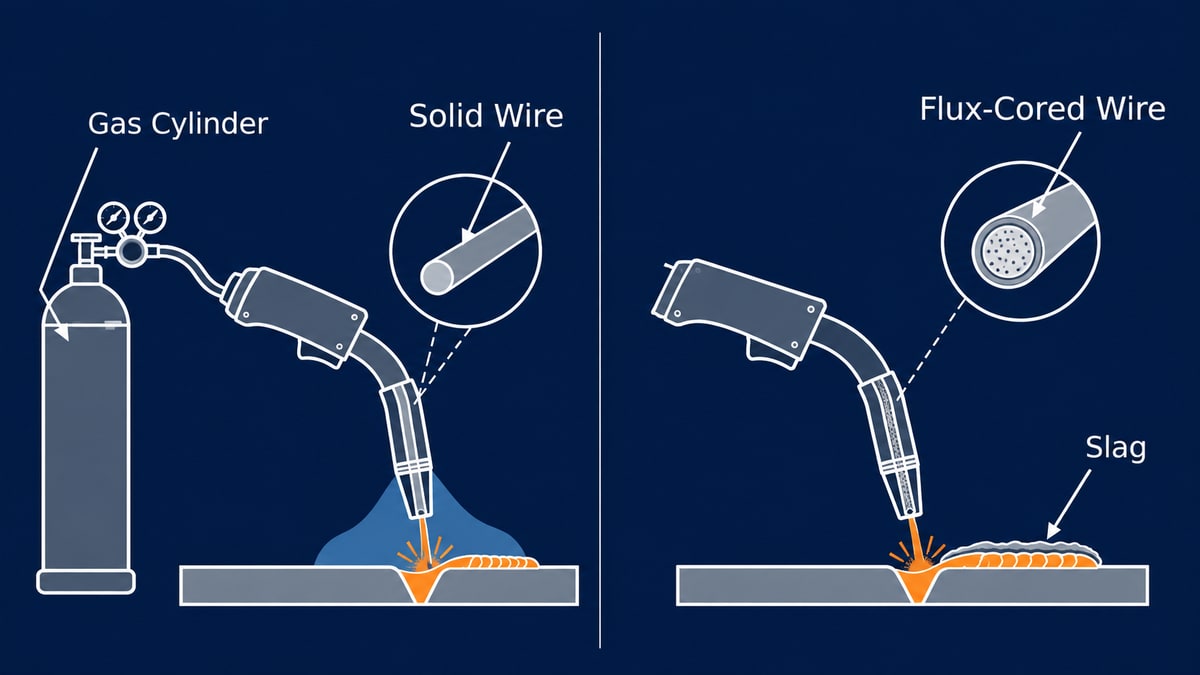
Figure 1: Gas-shielded MIG gets its protection from an external cylinder; gasless wire makes its own from the flux core.
The comparison goes beyond equipment. Weld appearance, cleanup, fume and outdoor performance all differ, and our article on flux cored vs mig welding looks at that choice from the process-selection side.
| Factor | Gasless (FCAW-S) | Gas-shielded MIG |
|---|---|---|
| Gas cylinder needed | No | Yes |
| Wind tolerance | Good | Poor without shelter |
| Spatter and bead appearance | More spatter, slag to remove | Cleaner, little slag |
| Smoke | Heavier | Lighter |
| Tolerance of dirty or rusty metal | Better | Needs cleaner surfaces |
| Thin sheet metal | Difficult | Easier |
| Typical use | Repairs, outdoor, structural | Shop fabrication, thin to medium steel |
Where Gasless MIG Welding Works Well
Outdoor and windy conditions. Wind can blow shielding gas away from the arc, which causes porosity in gas-shielded welding. Self-shielded wire does not depend on a gas envelope, so a breeze matters far less.
Repairs and farm or workshop jobs. If you only weld occasionally, skipping the cylinder rental, refills and regulator removes a real recurring cost and a logistics problem.
Thicker mild steel. Flux-cored processes are known for good penetration and high deposition on thicker sections, and are widely used in structural and heavy fabrication work.
Less-than-perfect surfaces. The flux chemistry tolerates mill scale and light surface contamination better than solid wire does. That does not mean you should skip cleaning, only that the process is more forgiving.
Who Should Choose It
Gasless wire suits you if you:
- weld mostly outdoors or in drafty spaces,
- work on mild steel of medium thickness,
- want the lowest start-up complexity, or
- need portability more than a pretty bead.
Where It Falls Short
Thin metal. Self-shielded wire runs hot and the arc is harder to control at low settings. Car body panels and thin sheet are where beginners burn through. If thin material is your main work, a gas-shielded solid-wire setup is the better fit, and our guide on how to weld thin sheet metal explains why.
Smoke and fume. The flux produces noticeably more visible smoke, which can hide the weld pool. Visible smoke is not a measure of how hazardous the fume is, so treat ventilation as mandatory regardless of how the weld looks.
Spatter and slag. Expect more spatter than with gas-shielded MIG, and every pass needs slag removed before the next. Skipping that step leads to slag inclusions, which are trapped pockets of non-metallic material.
Appearance. Welds can look rougher. For visible, cosmetic work, gasless is rarely the first choice.
Stainless and aluminum. Gasless wire is mainly a mild-steel solution. Aluminum cannot be effectively welded with flux-cored wire, and stainless needs the right wire type and extra fume precautions.
Setting Up a Machine for Gasless Wire
Many entry-level wire-feed machines support both solid and flux-cored wire. A few changes are usually needed when you switch.
Hardware Changes
- Polarity: set the lead polarity for self-shielded wire (normally electrode negative). Check the wire label and the machine manual.
- Drive roll: flux-cored wire is soft and hollow. Use a knurled drive roll, which grips without crushing the tube, instead of the V-groove roll used for solid wire.
- Contact tip and liner: match the tip bore to the wire diameter, and check that the liner is clean.
- Nozzle: many guides suggest running without the gas nozzle or using one designed for flux-cored wire, because spatter builds up quickly. Follow your gun's manual.
- Disconnect the gas: with no gas flowing, you avoid wasting it, but only if the solenoid is not set to open.
Settings and Technique
Wire feed speed and voltage are the two main controls, and they must be balanced against each other. A chart for your wire diameter is the starting point; our MIG welding wire speed voltage chart article explains the logic of that balance, and the same principle applies to flux-cored wire even though the numbers differ. Always use the wire manufacturer's recommended ranges as a starting point.
A few technique points are widely recommended for self-shielded wire:
- Use a drag (pulling) angle of roughly 10 to 20 degrees, rather than pushing the puddle.
- Keep electrode stickout consistent and within the wire maker's recommended range. Long or erratic stickout is a common source of porosity and spatter.
- Travel at a steady speed. Too fast gives poor fusion; too slow builds a heavy, rolled bead.
- Clean the slag completely between passes.
Wire Storage
Flux-cored wire absorbs moisture more readily than solid wire. Damp wire contributes to porosity, so keep spools dry and sealed when not in use.
Common Problems and What Causes Them
Figure 2 shows what a finished self-shielded bead looks like before cleanup, with the slag still covering the weld.
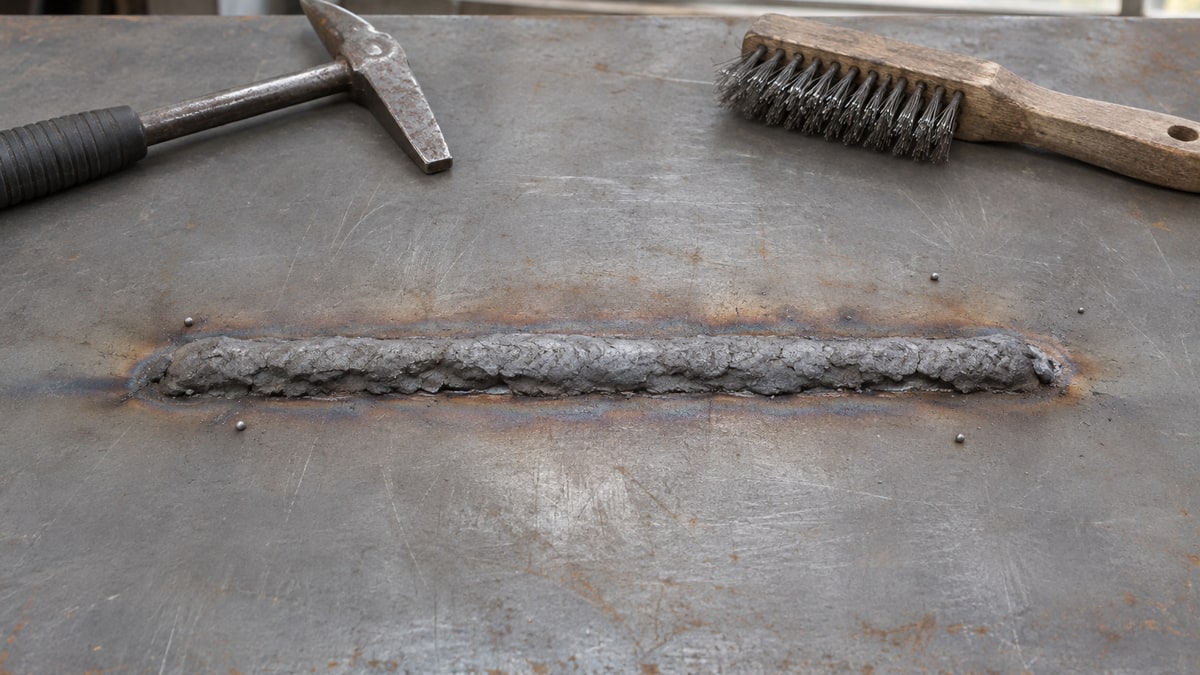
Figure 2: The slag layer protects the bead while it cools and must be chipped and brushed off before the next pass.
| Problem | Likely causes | What to try |
|---|---|---|
| Excess spatter | Voltage too high, wrong stickout | Lower voltage, shorten and steady the stickout |
| Porosity | Dirty metal, damp wire, wrong angle | Clean the joint, store wire dry, hold a drag angle |
| Lack of fusion | Travel too fast, voltage too low | Slow down, raise voltage in small steps |
| Burnback | Stickout too short, wire feed too slow | Increase stickout slightly, raise wire speed |
| Slag inclusions | Slag not removed between passes | Chip and wire-brush fully before restarting |
| Unstable arc | Wrong polarity, worn tip or liner | Verify polarity, replace consumables |
Safety: Fume, Fire and Eyes
Gasless welding does not remove any of the normal hazards, and the heavier smoke makes some of them easier to underestimate.
- Ventilation: use local exhaust at the arc or enough general ventilation to keep fume out of your breathing zone. Position yourself so the plume does not rise past your face. In enclosed spaces, a suitable respirator may be necessary; follow your local regulations and your employer's safety program.
- Fire: sparks and slag travel. In the United States, OSHA's general welding requirements call for removing or guarding combustibles, keeping extinguishing equipment ready and maintaining a fire watch where conditions require it.
- Eyes and skin: an auto-darkening helmet, flame-resistant clothing and gloves are still required.
- Electrical safety: a wire-feed machine presents the same shock risks as any arc welder.
This article is general information and not a substitute for local safety rules or training.
Is Gasless MIG Welding Worth It?
Gasless MIG welding is a practical tool when used for the right jobs. It is good for outdoor repairs, medium-thickness mild steel and anyone who wants to avoid the cost and complexity of a gas cylinder. It is a weaker choice for thin sheet, cosmetic work and anywhere you cannot ventilate well.
The honest summary: it trades cleanliness for convenience. If your projects need neat welds on thin material, plan to move to gas-shielded MIG. If you need to get a repair done in a breezy yard, gasless wire is hard to beat.
Frequently asked questions
Is gasless MIG welding actually MIG welding?
Not strictly. MIG (GMAW) uses solid wire with external shielding gas. Gasless welding uses self-shielded flux-cored wire (FCAW-S), which looks similar and often runs on the same machine but is a different process.
Can I use a MIG welder without gas?
Yes, if the machine supports flux-cored wire. You normally need to change the polarity, fit a suitable drive roll and use self-shielded flux-cored wire. Check the machine manual first.
Is gasless welding weaker than gas MIG?
Not inherently. Strength depends on the wire classification, correct settings and clean technique. Self-shielded wires are used in structural work. Poor technique, damp wire or wrong polarity cause weak welds in either process.
Why does gasless welding make so much smoke?
The flux in the wire core vaporizes to produce shielding gas and slag, which creates visible smoke. Smoke volume does not indicate how hazardous the fume is, so ventilate in every case.
Is gasless wire good for beginners?
It is forgiving of wind and imperfect surfaces, which helps. However, spatter, slag and heavy smoke can be frustrating, and thin metal is hard. Practice on scrap of medium thickness first.
Can I weld thin sheet metal with gasless wire?
It is difficult. The arc runs hot and burn-through is common. Gas-shielded solid wire with small-diameter wire gives better control on thin sheet.
Can I weld aluminum with gasless flux-cored wire?
No, not in any practical way. Use a MIG welder with a spool gun and the correct gas, or a TIG welder.
Which polarity does gasless wire use?
Self-shielded flux-cored wire normally uses electrode negative, while gas-shielded wire uses electrode positive. The wire label states the correct setting, so follow it.
Do I need to remove the slag?
Yes. Slag must be chipped and brushed off after each pass. Leaving it in place can trap non-metallic material in the next layer.
Can I use gasless MIG welding indoors?
Yes, provided there is effective ventilation or fume extraction. Because the process produces heavy smoke, a garage with the door cracked open is usually not enough.
References
- Flux Cored Arc Welding (FCAW): What It Is, How It Works, and How to Fix Common Issues - American Welding Society, Welding Digest, 2025. Process types, troubleshooting, drag angle and stickout guidance.
- Flux-cored arc welding - Wikipedia, accessed 2026-11-17. Overview of self-shielded and dual-shield variants and polarity.
- 1910.252 - General requirements - Occupational Safety and Health Administration, accessed 2026-11-17. Fire prevention and ventilation requirements for welding.
- Controlling Hazardous Fume and Gases during Welding (FactSheet FS-3647) - Occupational Safety and Health Administration, accessed 2026-11-17. Fume control and ventilation overview.
- Safety & Health of Welders - Hobart Institute of Welding Technology, accessed 2026-11-17. Ventilation and respiratory protection guidance.