
Best Stick Welder for Beginners
How to choose the best stick welder for beginners: inverter vs transformer, amperage, duty cycle, input power, arc features and the mistakes to avoid.

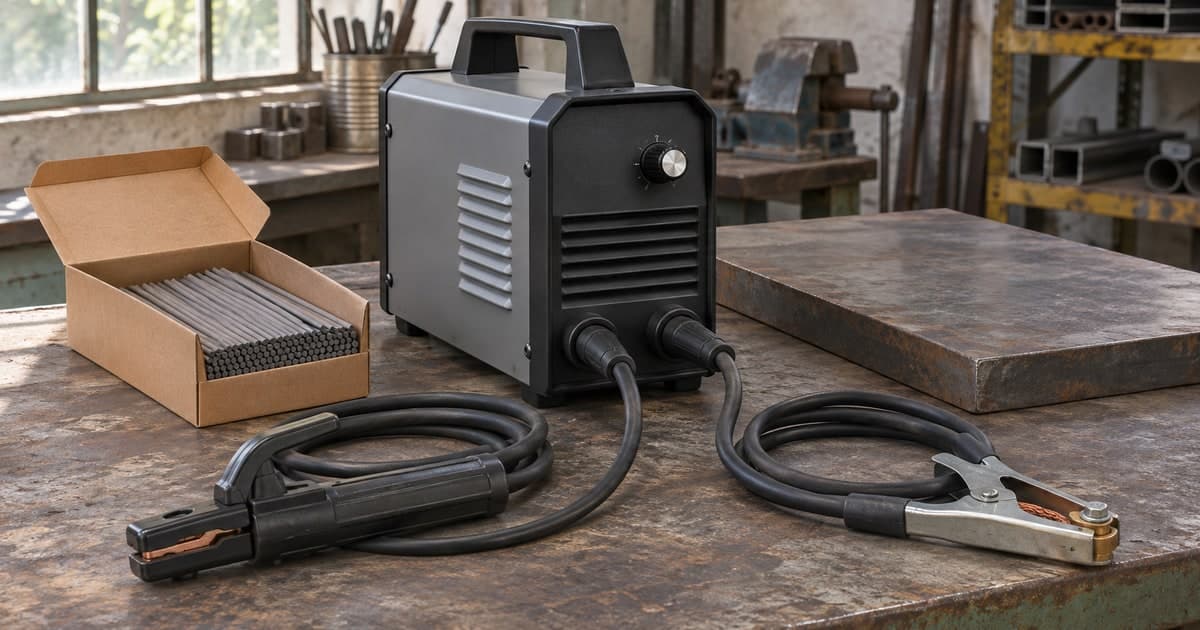
Searching for the best stick welder for beginners usually turns up long lists of model numbers. The trouble is that the right machine depends far less on a brand than on four things: the power you can plug into, the thickness you want to weld, how steady the arc feels, and how much abuse the machine will take. Get those four right and almost any well-built modern unit will let you learn. Get them wrong and you will fight the machine instead of the weld.
This guide skips model names on purpose. Instead it explains what each specification means, which features genuinely help a new welder, and where money is wasted. If you are still deciding whether stick is the right process, read what is stick welding first. If you already know it is, keep going.
Why Stick Is a Sensible First Welder
Stick welding, formally shielded metal arc welding (SMAW), uses a flux-coated consumable rod. The flux burns to form a shielding gas and a slag layer, so no gas cylinder is required. That is why the process works outdoors, on rusty or painted steel, and on a farm gate in a breeze that would blow shielding gas away from a MIG weld.
The equipment is also simple. The circuit is a power source, a cable to the electrode holder, the arc, the workpiece, and a ground clamp with its return cable. Fewer parts mean fewer things to break and a lower entry cost than most other processes.
The trade-offs are real, though:
- Slag must be chipped off after every pass.
- Rods are consumed in short lengths, so you stop and restart often.
- Striking and holding an arc takes practice.
- Productivity is lower than wire processes.
None of that matters much for repair work, hobby fabrication, and learning fundamentals. It matters a lot if you plan to weld all day.
What the Machine Actually Does
Stick welding uses a constant current (CC) power source. The machine holds the amperage near the value you dial in, and the arc voltage floats with the length of your arc. Lift the rod a little and voltage rises; push closer and it falls. This is what makes stick forgiving of small hand movements and is why the process is a standard teaching tool.
Figure 1 shows the complete circuit. Understanding it helps with buying, because every weak link (an undersized cable, a poor ground clamp, a cheap electrode holder) shows up as an unstable arc.
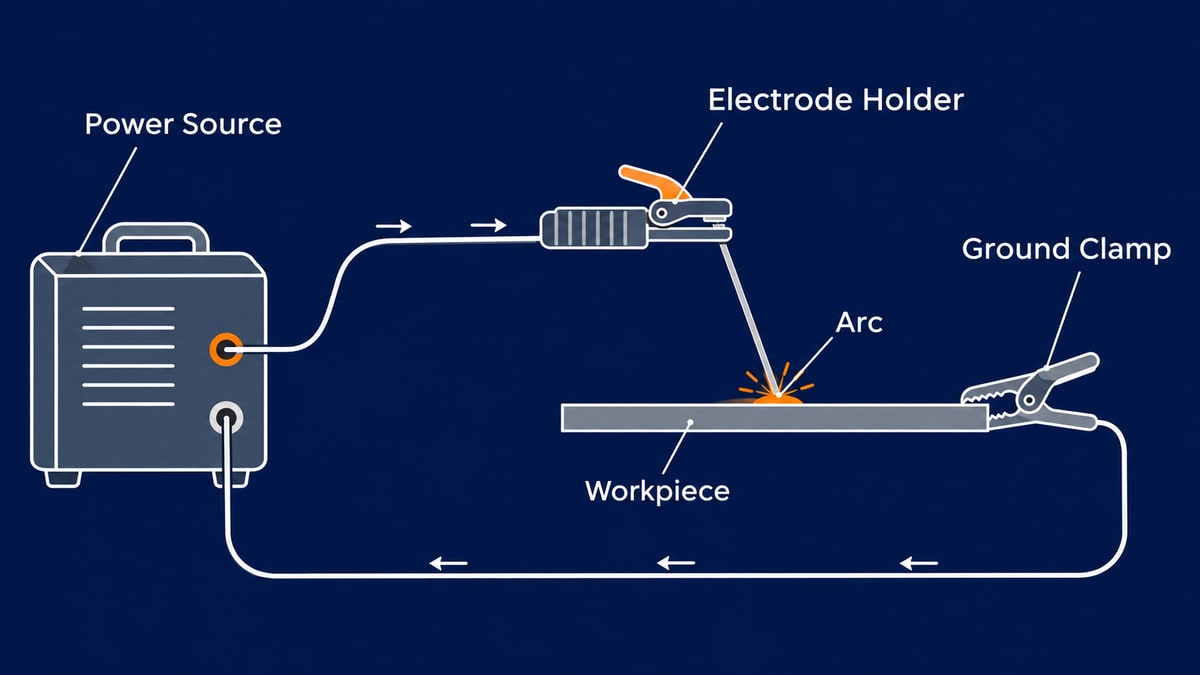
Figure 1: The stick welding circuit. Current leaves the power source, crosses the arc, and returns through the workpiece and ground clamp.
The Specifications That Matter
Output Amperage Range
The amperage range tells you what thickness and rod diameters the machine can run. Rod packaging lists a recommended current range for each diameter, and the machine must cover that range comfortably, not just at its very top.
For a beginner working on sheet, small brackets, and general repair, a modest machine is enough. For structural steel or thick plate, you need more output and a better duty cycle. Buying a very small unit and then trying to run large rods on it is the most common cause of poor results and overheated machines.
A practical approach:
- List the thickest material you expect to weld in the next two years.
- Check the current range recommended for the rod size that thickness calls for.
- Choose a machine whose rated output sits comfortably above that current at a usable duty cycle.
If you are unsure which rod suits which job, the guide to the best stick welding electrodes walks through the common classifications and their settings.
Duty Cycle
Duty cycle is the portion of a ten-minute period a machine can deliver a given current without overheating. A rating of 30% at a stated amperage means roughly three minutes of welding and seven minutes of cooling at that current. At lower currents the same machine can usually run longer.
Beginners often misread this number, so keep three points in mind:
- Duty cycle is always tied to a specific current. A machine rated for a high duty cycle at a low current may only manage a small one at maximum output.
- Stick welding naturally includes pauses for chipping slag and changing rods, which helps the machine cool.
- A machine with a thermal protection circuit will shut down instead of burning out, but repeated shutdowns are a sign you have undersized it.
Compare duty cycles at the amperage you will actually use, not at the headline maximum.
Input Power and Plug
Check what you can plug into before you look at anything else.
- 120 V household circuits limit output because of breaker capacity. Machines that run on them are portable and handy for light work, but you cannot expect heavy-plate performance.
- 240 V circuits allow substantially more output and are the norm for serious work.
- Dual-voltage machines accept either and are a sensible choice for a beginner whose workshop situation may change.
Also consider the extension cord. A long, thin cord drops voltage and starves the machine. Use a cord rated for the machine's input current, keep it short, and follow the manufacturer's instructions on circuit size.
Inverter vs Transformer
This is the choice most buyers face.
| Feature | Inverter | Transformer |
|---|---|---|
| Weight | Light, easy to carry | Heavy, often on a cart |
| Arc feel | Generally smoother, easier starts | Can be rougher, especially at low current |
| Features | Often includes arc force, hot start, anti-stick | Usually basic controls |
| Repair | Electronics, harder to fix at home | Simple, robust, long-lived |
| Cost | Wide range; compact units are affordable | Often inexpensive for the output |
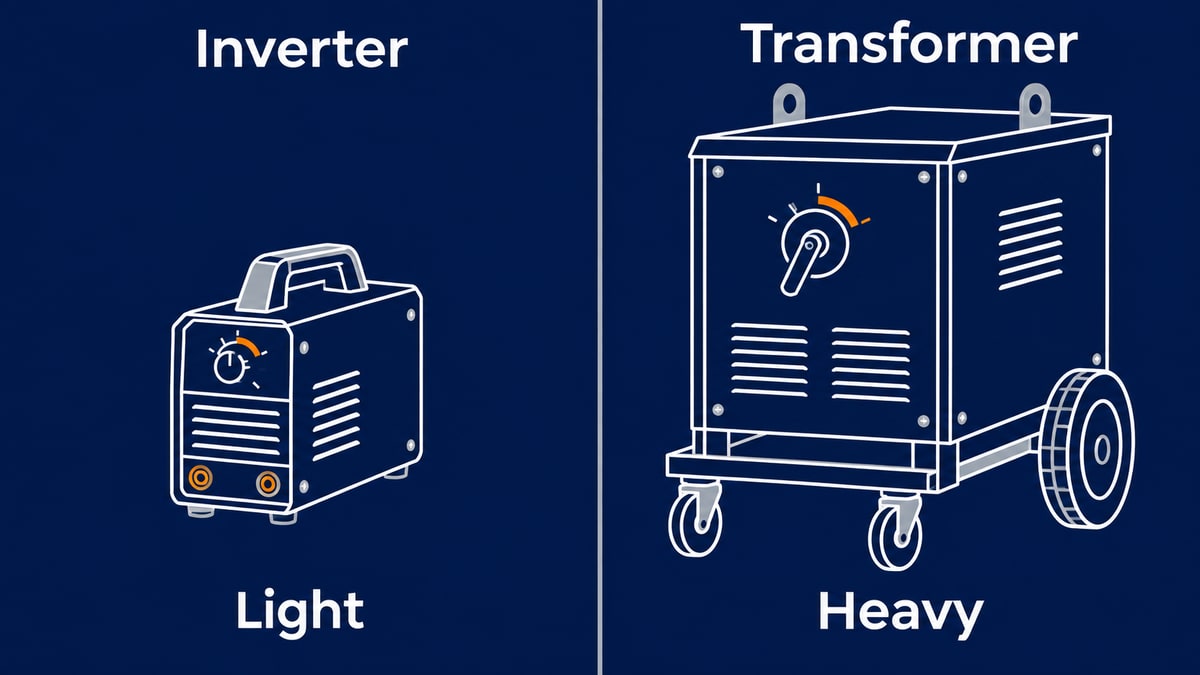
Figure 2: Inverter machines trade simplicity for weight savings and arc control; transformer machines trade portability for ruggedness.
For most beginners, an inverter is the easier machine to learn on, because the arc is more forgiving and the unit can go wherever the work is. A transformer is a legitimate choice if you have a fixed shop, want something that tolerates rough handling, and can accept a heavier arc at low settings.
AC, DC, or Both
Many classic transformer machines produce AC only. Most inverters produce DC. DC generally gives a smoother, more stable arc and works with a wider range of electrodes, which is why it is the better default for learning. AC is fine for many common rods but can be harder to run at low amperage on thin material, and some low-hydrogen or specialty electrodes need DC or an AC machine with higher open-circuit voltage.
Before you commit, check that the electrodes you plan to use are compatible with the machine's output type. The rod's classification and packaging will say whether it runs on AC, DC, or both.
Features That Genuinely Help a Beginner
Hot Start
Hot start briefly boosts current at the instant the arc is struck. It helps the rod ignite cleanly and reduces the frustrating stutter many new welders experience at the start of a bead.
Arc Force
Arc force (sometimes called dig) automatically increases current when the arc gets very short. It prevents the rod from freezing to the work as you learn to hold a steady arc length, and it helps with rod types that need a digging arc.
Anti-Stick
Anti-stick cuts output if the rod sticks, so you can pull it free without a red-hot rod and a glowing holder. It is a comfort feature and a safety feature, and it is a good reason to prefer a modern inverter for a first machine.
Adjustability
Look for a current control that is easy to read and set precisely. Cheap analogue dials can be hard to calibrate, so verify your setting by testing on scrap, not just by trusting the number.
Features You Can Skip
Many buyers pay for extras they never use. Digital displays and multiple process modes may be appealing, but a simple, solid, well-built stick machine will teach you more than a feature-packed unit with weak cables.
What Else Is in the Box (and What Is Not)
A machine is only as good as its accessories. Check the following before buying.
- Electrode holder: must be rated for the machine's maximum current and fully insulated where you grip it.
- Welding cables: flexible, fully insulated, and long enough to reach your work. Cables that are too thin overheat and cause arc instability.
- Ground clamp: a poor clamp is the hidden cause of many "bad machine" complaints. It must grip clean metal firmly.
- Plug and cord: matched to your outlet.
- Helmet, gloves, and clothing: often not included, and never optional. For a deeper look at the rest of your kit, see the welding equipment guide.
In North American construction regulations, for example, electrode holders must be designed for arc welding and rated for the current they carry, cables must be fully insulated and flexible, and machine frames must be grounded. Those rules are written for worksites, but they describe good practice for anyone.
Safety Basics Before You Strike an Arc
Stick welding has electrical, burn, fume, and fire hazards. The most important electrical point for a beginner is simple: the output circuit is lower voltage, but the input side of the machine carries mains voltage, and damaged cords, wet floors, and bare conductors can be dangerous.
Sensible habits include:
- Inspect cables, the electrode holder, and the plug before every session.
- Keep your gloves and clothing dry, and avoid welding while standing in water or on a damp floor.
- Never use a damaged or spliced cable near the holder end.
- Make sure the machine is properly grounded and plugged into a circuit of the correct rating.
- Ventilate the workspace and keep flammable materials well away from sparks.
- Wear an approved helmet and protective clothing, because the arc emits intense ultraviolet and visible light.
Anyone working on a construction site or in employment should follow their applicable regulations and training requirements. If you are unsure about wiring a dedicated outlet, hire a qualified electrician.
Matching the Machine to Your Situation
Different goals call for different priorities.
Weekend Repairs and Hobby Projects
A compact dual-voltage inverter is usually the best match. It is light, tolerates a normal garage outlet, and its arc features help while your hand skill develops.
Farm, Ranch, and Outdoor Maintenance
Stick's tolerance of wind and dirty steel makes it a good fit. Prioritise ruggedness, adequate cables, and generator compatibility if you will work away from grid power. Check the manufacturer's generator guidance, because not every machine runs well on every generator.
Learning Toward a Trade Certificate
If you intend to test for a welder qualification, a machine with a wider current range and stronger duty cycle will serve you better, and you should practise on the processes and positions the test requires.
Planning to Add Other Processes Later
If you may want TIG or wire welding eventually, you may prefer a multi-process machine. Be aware that a multi-process unit rarely excels at every process, so decide whether stick is truly your first priority. If TIG is your ultimate goal, compare it against the best TIG welder for beginners.
Common Buying Mistakes
- Buying on maximum amperage alone. The number printed in large type may only be reachable at a very low duty cycle.
- Ignoring input power. A 240 V machine is no use if you can only plug into a 120 V outlet.
- Undersizing for the work. A tiny machine running large rods overheats and gives a poor arc.
- Skipping accessories. Thin cables and weak clamps ruin the arc.
- Buying used without testing. Check for cracked cables, damaged plugs, burn marks, and fan noise. If possible, strike an arc before paying.
- Treating features as a substitute for practice. A smoother arc helps, but skill still comes from seat time.
How to Test a New Machine
When your machine arrives, do not start on a real project. Do this instead:
- Inspect cables and connectors, and confirm the holder and clamp are tight.
- Choose a general-purpose rod suitable for your machine and clean mild steel scrap.
- Start in the middle of the rod's recommended current range and adjust a few amps at a time.
- Strike and hold an arc on a flat plate and observe how it behaves.
- Run a few short beads. A good arc sounds steady, with a consistent crackle, not erratic popping.
- If the rod sticks constantly, raise the current or arc force. If the bead is wide and the metal is burning through, lower it.
Keep notes. Over a few sessions you will build a personal settings chart that is worth more than any generic table.
Conclusion
The best stick welder for beginners is not the one with the biggest number on the box. It is the machine that matches your power supply, covers the thickness you actually weld, offers a stable arc with hot start and anti-stick, and comes with sound cables and a good ground clamp. For most newcomers that points toward a dual-voltage DC inverter with reasonable duty cycle, while a rugged transformer can serve a fixed shop well.
Spend a little more on a quality machine and accessories, spend your time on scrap steel, and learn the fundamentals before chasing extra features. Do those things and the first machine you buy will be the one you keep for years.
Frequently asked questions
What is the best stick welder for a complete beginner?
A dual-voltage DC inverter with hot start, arc force, and anti-stick is generally the easiest to learn on. It is light, runs on common outlets, and gives a forgiving arc. The exact model matters less than matching output, duty cycle, and input power to your work.
How many amps do I need for a beginner stick welder?
It depends on the material thickness and rod size. Check the current range printed on your electrode packaging, then pick a machine that covers it comfortably with some margin. Light repair work needs much less than structural steel.
Can I run a stick welder on a regular 120 V outlet?
Many compact machines can, but output is limited by the circuit's capacity. That is fine for thin or light material, though thicker steel is better served by 240 V. Always follow the manufacturer's guidance on circuit size and extension cords.
Is an inverter or a transformer stick welder better for beginners?
An inverter is usually easier because the arc is smoother and the machine is portable. A transformer is simpler, heavy, and rugged, which suits a fixed shop. Either can work if the output, duty cycle, and electrode compatibility fit your needs.
Is AC or DC better for learning stick welding?
DC is generally easier to learn on because the arc is more stable and a wider range of electrodes run well on it. AC is workable for many common rods but can be harder at low currents. Always confirm electrode compatibility with your machine.
What does duty cycle mean on a stick welder?
It is the share of a ten-minute period the machine can deliver a stated current without overheating. For example, 30% means about three minutes of welding and seven of cooling at that current. Lower currents usually allow longer run times.
Do I need a gas cylinder for stick welding?
No. The flux coating on the electrode produces its own shielding gas as it burns. That is one reason stick is popular for outdoor work and field repairs.
Can a stick welder weld thin sheet metal?
It is possible but difficult, because the arc is energetic and burn-through is common. A machine with good low-current control and smaller rods helps. For regular thin sheet work, a wire or TIG process is often easier.
What should I buy besides the machine?
You need a helmet, welding gloves, flame-resistant clothing, closed boots, a chipping hammer, a wire brush, and a supply of suitable electrodes. Check the cables, holder, and ground clamp too, since weak accessories cause many arc problems.
Is a used stick welder a good idea?
It can be, particularly for simple transformer machines, but inspect it carefully. Look for damaged cables and plugs, burn marks, and unusual noises, and test an arc before you pay. Be cautious with machines that have been heavily abused.
Can I run a stick welder from a generator?
Often yes, but compatibility varies. Output capacity, waveform quality, and the machine's input requirements all matter. Consult the welder manufacturer's generator recommendations before relying on this setup.
References
- 1926.351 - Arc welding and cutting - Occupational Safety and Health Administration (U.S. Department of Labor). Requirements for electrode holders, cables, grounding, and machine frames in construction.
- Beginner's Guide to Shielded Metal Arc Welding (SMAW) - Universal Technical Institute, accessed 2026-11-20. Overview of the process, circuit, and flux shielding. Training-school source.
- Arc Welding Processes - Australian Steel Institute. Technical reference on arc welding processes and power source duty cycle.
- Arc Welding and Electrical Safety (Toolbox Talk) - National Institute for Occupational Safety and Health (CDC), 2022. Electrical hazards while arc welding.