
Best Stick Welding Electrodes for Beginners
A practical guide to the best stick welding electrodes for beginners, covering E6013, E6011, and E7018, plus sizing, polarity, and storage.

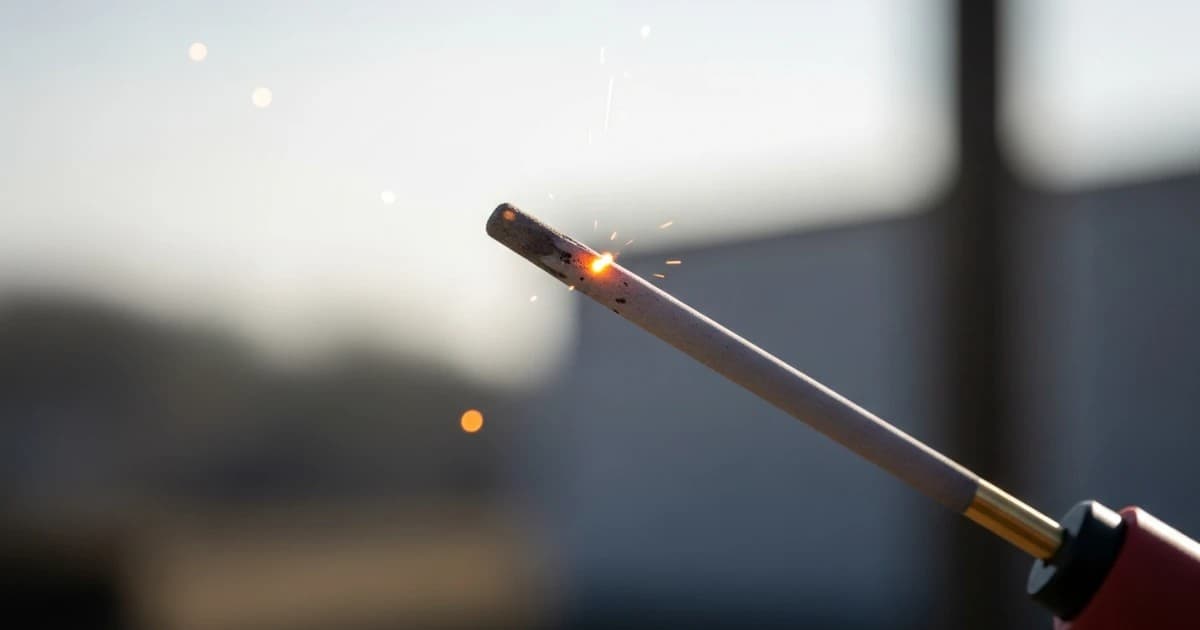
Walk into any welding supply counter and ask for "some welding rods," and you'll get a blank stare, because the answer depends entirely on what you're welding, how thick it is, and what kind of machine you're running. For anyone starting out, choosing the best stick welding electrodes for beginners usually comes down to three practical options — E6013, E6011, and E7018 — each suited to a different combination of equipment, base metal condition, and skill level. Picking the wrong one doesn't just make welding harder than it needs to be; it can produce welds that look fine on the surface but fail where it matters.
This guide breaks down what those electrode codes actually mean, which rods make the most sense for someone just learning the arc, how to size and set them correctly, and the mistakes that trip up nearly every new stick welder before they figure out what's going on.
What the Numbers on a Welding Rod Actually Mean
Every stick electrode sold in the United States carries a code like E6013 or E7018, and that code isn't arbitrary. It follows the American Welding Society's A5.1 specification for carbon steel electrodes, and once you can read it, you can walk up to almost any rod on a shelf and know roughly what it's for before opening the box.
- E simply means electrode.
- The first two digits (60 or 70) indicate the minimum tensile strength of the deposited weld metal in thousands of PSI. A 60-series rod produces welds rated to at least 60,000 PSI; a 70-series rod is rated to at least 70,000 PSI.
- The third digit describes the welding positions the rod can be used in. A "1" means all-position (flat, horizontal, vertical, overhead); a "2" restricts it to flat and horizontal only.
- The fourth digit describes the flux coating type and the type of current the electrode runs on — this is what actually determines how the arc behaves, how much penetration you get, and how forgiving the rod is to run.
So E6013 is a 60,000-PSI, all-position, rutile-coated rod that runs on AC or DC. E7018 is a 70,000-PSI, all-position, low-hydrogen rod. That coding system is standardized industry-wide, which is why an electrode box from one manufacturer behaves the same as another manufacturer's box carrying the same classification.
Why Electrode Choice Matters More Than Beginners Expect
New welders tend to assume the rod is a minor detail compared to the machine or the technique. In practice, the electrode does a huge share of the work. The flux coating determines how easily the arc strikes, how much spatter you'll fight, how the slag releases, and how forgiving the rod is of an inconsistent arc length or travel speed — all things a beginner hasn't mastered yet.
Choose a rod that's too aggressive or unforgiving for your skill level, and you'll spend your first weeks fighting the electrode instead of learning the fundamentals. Choose one that's too soft or low-penetration for the joint you're actually welding, and you can end up with a weld that looks acceptable but lacks the fusion to hold under load. Matching the rod to both your skill level and the job is the single biggest lever a beginner has over how quickly they improve.
The Electrodes Beginners Should Actually Know
Dozens of electrode classifications exist, but a beginner only needs to understand three well, plus a fourth by reputation.
E6013 — The Easiest Rod to Learn On
E6013 is a rutile-coated electrode designed to produce a smooth, stable arc with light spatter and easy slag removal. It runs on AC or DC, works well at lower amperages, and tolerates an imperfect arc length far better than most other rods — which is exactly why it's the electrode most welding instructors hand to first-timers. It produces shallower penetration than 60-series or 70-series alternatives, which makes it a strong choice for thin sheet metal and light fabrication, but a weaker choice for structural joints on thicker material.
Because E6013 forgives a wandering arc and inconsistent technique, it's the rod where a beginner can actually watch their bead improve week over week without fighting the electrode itself.
E6011 — The Rough-and-Ready Alternative
E6011 uses a cellulose-potassium coating that gives it a more aggressive, deeper-penetrating arc than E6013, along with the ability to run on AC or DCEP. That flexibility matters for beginners working with older transformer welders or generator-powered machines that don't offer the smooth arc control of a modern inverter. E6011 also tolerates rust, mill scale, and even old paint on the base metal better than most other electrodes, which makes it a practical choice for farm repair, fencing, and outdoor maintenance work where the steel hasn't been cleaned.
The tradeoff is a harsher, more spattery arc that takes more hand control to manage. It's a good second rod to learn once E6013 basics are comfortable, particularly for anyone who expects to weld on dirty or previously painted steel.
E7018 — The Rod You'll Grow Into
E7018 is a low-hydrogen electrode, and it's the rod most structural and code welding actually requires, because its low-hydrogen coating produces welds with fewer inclusions and much better resistance to cracking. Its arc is smoother than E6011's and its weld metal is stronger and more ductile than E6013's, which is why it's the standard choice once a beginner starts working on anything load-bearing.
The catch is that E7018 is far less forgiving of poor storage. Its coating is designed to keep hydrogen out of the weld, but the flux itself readily absorbs atmospheric moisture, and a damp rod defeats the entire purpose of using it — more on that below. Most instructors introduce E7018 after a student has built confidence on E6013, since the electrode itself is easy to run but the handling requirements add a layer most total beginners aren't ready to manage yet.
E6010 — Worth Knowing, Not Recommended First
E6010 is a high-cellulose, DC-only electrode known for aggressive, deep-penetrating arc characteristics — the classic "pipe rod" used for root passes on pipeline welds. It's genuinely useful once you have arc control, but its forceful, digging arc and DC-only requirement make it a poor starting point. Most beginners are better served learning fundamentals on E6013 or E6011 before attempting E6010.
AC or DC? Matching Electrodes to Your Welder
Not every rod runs on every type of current, and using the wrong polarity produces an unstable arc no matter how good your technique is.
| Electrode | Current | Notes |
|---|---|---|
| E6013 | AC or DC (either polarity) | The most flexible option; works on nearly any stick welder |
| E6011 | AC or DCEP | Potassium in the flux stabilizes the AC arc at current zero-crossing |
| E7018 | DCEP (AC-capable variants exist) | Runs best on DC positive; check the box for AC rating |
| E6010 | DCEP only | Will not run acceptably on AC |
If you own an older AC-only transformer welder, E6013 and E6011 are your practical options. If you're running a modern DC or dual-current inverter, all of these become available, and DCEP is the default polarity for most stick electrodes because it concentrates more heat at the workpiece, improving penetration and bead control.
Choosing the Right Electrode Diameter and Amperage
Electrode diameter should generally match — or run one size smaller than — the thickness of the base metal, and amperage should sit within the range printed on the box, adjusted for position and joint fit-up. As a starting reference:
| Diameter | E6013 Amperage | E6011 Amperage | E7018 Amperage |
|---|---|---|---|
| 1/16 in | 20–45 A | — | — |
| 3/32 in | 40–90 A | 40–85 A | 70–110 A |
| 1/8 in | 80–130 A | 75–125 A | 90–165 A |
| 5/32 in | 105–180 A | 110–165 A | 130–220 A |
These ranges are starting points, not fixed settings. The right amperage for a given rod also depends on your machine, the joint position, and how the puddle actually looks — too cold and the bead sits on top without fusing; too hot and you'll blow through thin material or create excessive spatter and undercut. For most beginners working on 1/8-inch to 1/4-inch mild steel, a 3/32-inch or 1/8-inch electrode covers the majority of practice welding.
Matching the Electrode to the Job
Rusty, painted, or dirty steel. E6011 is the most forgiving choice here, since its aggressive arc can burn through light surface contamination that would cause porosity in a cleaner-running rod. That said, no electrode fully replaces proper surface prep — grinding or wire-brushing the joint still produces a stronger, cleaner weld.
Thin sheet metal. E6013 at a lower amperage and smaller diameter gives the best control against burn-through, thanks to its shallower penetration profile.
Structural or load-bearing joints. E7018 is the standard choice, and often the code-required one, because of its superior ductility and crack resistance.
Outdoor work in wind. All SMAW electrodes tolerate wind far better than gas-shielded processes like MIG, since the shielding comes from the flux coating rather than a gas cloud that can be blown away. E6011 is a common pick for field repair work for this reason.
Vertical and overhead welding. Look for a "1" as the third digit in the classification (E6011, E6013, E7018 are all all-position rods), and expect to run lower amperage than you would in the flat position to keep the puddle from sagging.
E7018 and Moisture: The Detail Beginners Get Wrong
Low-hydrogen electrodes like E7018 exist specifically to keep hydrogen out of the weld metal, because dissolved hydrogen is a primary driver of hydrogen-induced (cold) cracking — cracking that can appear hours or even days after a weld has cooled completely. The problem is that E7018's coating is hygroscopic: it actively absorbs moisture from the surrounding air.
A rod left out of its packaging for too long can reabsorb enough moisture to undermine the entire reason for using it in the first place, producing porosity, arc instability, and — in structural or high-strength steel applications — a real cracking risk. Manufacturers specify moisture limits typically between 0.2 and 0.6 percent for low-hydrogen coatings, and most recommend storing opened E7018 in a heated rod oven around 250–300°F, with exposure outside the oven limited to a few hours before the rod should be reconditioned by baking at a higher temperature, generally in the 500–800°F range depending on the manufacturer's instructions.
For a beginner buying a small box of E7018 for practice, this mostly means: keep the box sealed until you're ready to use it, don't leave rods sitting out between sessions, and don't assume a rod that's been in a garage for two years is still good. E6013 and E6011 are far more tolerant of ordinary storage, which is one more reason they're easier rods to start on.
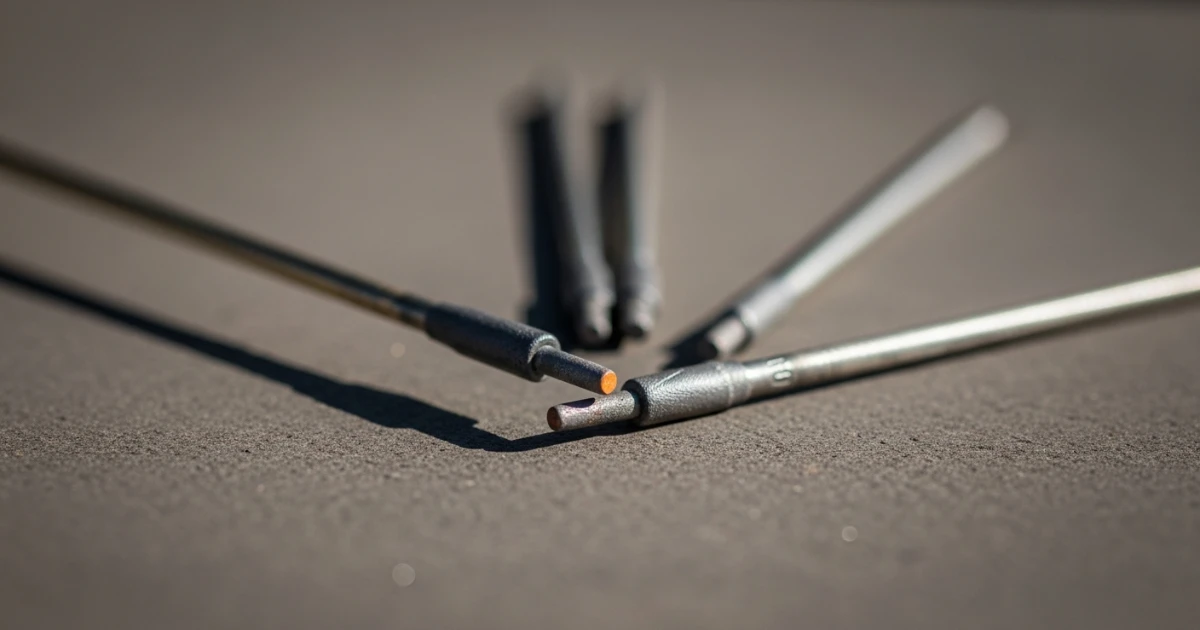
Common Mistakes Beginners Make Choosing and Running Electrodes
- Buying whatever rod is cheapest or most available, without checking whether it matches the welder's polarity or the base metal.
- Using too large a diameter for thin material, which requires more amperage than the joint can handle and leads to burn-through.
- Using too small a diameter for thick material, producing a rod that can't deliver enough heat, resulting in poor fusion and a weak, underfilled joint.
- Skipping surface prep on the assumption that stick welding "doesn't need it." Stick welding tolerates dirty steel better than other processes, but rust, oil, and heavy mill scale still weaken the weld.
- Leaving E7018 rods exposed to air for days, then wondering why welds are suddenly porous or crack later.
- Assuming a higher tensile-strength rod is always the better choice. E7018 isn't automatically "better" than E6013 for every job — it's better for structural strength, but E6013 is easier to run and better suited to thin material and cosmetic work.
- Chasing amperage settings from a chart without watching the puddle. Charts are a starting point; the actual weld pool tells you whether you're too hot or too cold.
Best Practices for Getting Clean Welds as a Beginner
Beyond electrode selection, a few habits make the biggest difference early on:
- Hold a consistent arc length, roughly equal to the diameter of the electrode's core wire. Too long an arc causes spatter and poor penetration; too short causes the rod to stick.
- Keep a steady travel speed. A puddle that looks narrow and ropey usually means you're moving too fast; a wide, flat puddle with excess buildup usually means you're moving too slow.
- Angle the electrode 5–15 degrees in the direction of travel for most flat and horizontal welds, adjusting for the specific joint and position.
- Chip and wire-brush slag completely between passes. Trapped slag is one of the most common causes of inclusions in multi-pass welds.
- Practice striking the arc before worrying about bead appearance. A clean, confident strike with minimal sticking is the first real skill stick welding demands, and it improves faster with repetition than any other part of the process.
Misconceptions About "Best" Electrodes
There's no single electrode that's objectively best — only the best rod for a given combination of metal, joint, position, and equipment. A few myths worth clearing up:
"E7018 is always the superior rod." It produces stronger, more ductile welds, but it demands moisture control that E6013 and E6011 don't, and its arc characteristics aren't automatically easier for a first-timer to manage.
"Thicker electrodes make stronger welds." Diameter should match the joint and amperage available, not personal preference. An oversized rod on thin material often produces a weaker, burned-through joint, not a stronger one.
"Any AC stick welder can run any rod." Several common electrodes, including E6010 and standard E7018, are DC-only or perform poorly on AC. Always check the classification against your machine's available current.
"You don't need to clean the metal if you're stick welding." SMAW is more tolerant of contamination than gas-shielded processes, not immune to it. Rust, paint, and oil still reduce weld quality.
Comparison at a Glance
| Electrode | Tensile Strength | Current | Penetration | Best For | Beginner Difficulty |
|---|---|---|---|---|---|
| E6013 | 60,000 PSI | AC or DC | Shallow–medium | Thin steel, general practice, cosmetic welds | Easiest |
| E6011 | 60,000 PSI | AC or DCEP | Medium–deep | Dirty/rusty steel, field repair, older machines | Moderate |
| E7018 | 70,000 PSI | DCEP (some AC-rated) | Medium | Structural welds, code work, high-strength joints | Moderate, plus storage care |
| E6010 | 60,000 PSI | DCEP only | Deep | Pipe root passes, experienced use | Advanced |
Which Electrode Should You Buy First?
For nearly all beginners, a box of E6013 in 3/32-inch diameter is the most sensible starting point. It runs on almost any welder, forgives an inconsistent arc, and gives immediate feedback on the fundamentals — arc length, travel speed, and angle — without the added complexity of moisture-sensitive storage or a harsh, spattery arc.
Once striking an arc and running a consistent bead feels natural, adding a box of E6011 makes sense for anyone expecting to weld outdoors or on less-than-clean steel. E7018 is worth introducing once you're comfortable with basic technique and ready to start practicing for structural or code-quality welds — just budget for a small rod oven or a sealed storage container if you plan to keep it around for more than a single project.
Safety Essentials Beginners Shouldn't Skip
Stick welding produces intense UV and infrared radiation, spatter, and metal fume that require real protective equipment, not shortcuts. A properly rated auto-darkening helmet, flame-resistant gloves and clothing, and safety glasses underneath the helmet are the baseline. Welding fume contains metal particulates — including manganese in many mild-steel applications — that can cause both acute respiratory irritation and, with sustained heavy exposure, more serious long-term health effects, so adequate ventilation or local fume extraction matters even for occasional home-shop welding, not just industrial settings. Under U.S. workplace regulations, ventilation and PPE requirements for welding are addressed directly by OSHA's general industry standard for welding, cutting, and brazing. Ceramic or ferrous dust from grinding, along with UV exposure to bare skin, are easy to underestimate until they've already caused a burn or irritation — treat full protective gear as non-negotiable from your very first practice bead.
Bringing It Together
The best stick welding electrodes for beginners aren't the strongest or most technically impressive ones on the shelf — they're the ones that match your machine, your base metal, and your current skill level closely enough that you can focus on learning the arc instead of fighting the rod. Start with E6013 to build fundamentals, add E6011 when you need to weld dirtier or outdoor steel, and move into E7018 once you're ready for structural-grade welds and willing to manage its storage requirements. Get the diameter and amperage roughly right, keep your electrodes dry, and let the puddle — not the chart — tell you when a setting is working.
Frequently asked questions
What is the easiest stick welding electrode for a beginner to learn on?
E6013 is generally considered the easiest electrode for beginners. Its rutile flux coating produces a smooth, stable arc with light spatter and forgiving slag removal, and it tolerates an inconsistent arc length far better than most other rods.
Can I use the same electrode for every welding project?
No single electrode works well for every situation. E6013 suits thin material and general practice, E6011 handles dirty or rusty steel better, and E7018 is the standard choice for structural or code-required welds. Matching the rod to the job matters more than picking one "all-purpose" electrode.
What size welding rod should a beginner start with?
A 3/32-inch electrode is a practical starting diameter for most beginner practice on 1/8-inch to 3/16-inch mild steel. It's small enough to control easily and large enough to lay a solid, visible bead without excessive amperage.
Does stick welding require a specific type of welder?
It depends on the electrode. E6013 runs on both AC and DC welders, making it usable on almost any machine, including older AC-only transformer units. E6010 and standard E7018 require DC output, specifically DCEP, so check your machine's capabilities before buying rods that need a polarity it doesn't provide.
Why does E7018 need to be stored differently than other rods?
E7018 is a low-hydrogen electrode, and its flux coating readily absorbs atmospheric moisture. If that moisture isn't controlled, it converts to hydrogen in the weld pool during welding, which can cause porosity and, in structural or high-strength applications, delayed cracking. Keeping the rod sealed and using a rod oven for extended storage prevents this.
Is E6011 or E6013 better for a first-time welder?
E6013 is usually the better first choice because of its smoother, more forgiving arc. E6011 is worth learning shortly after, particularly if you expect to weld on rusty, painted, or otherwise less-than-clean steel, since it tolerates surface contamination better.
Do I need to clean the metal before stick welding?
Yes, even though stick welding tolerates dirty steel better than gas-shielded processes. Rust, oil, and heavy paint reduce weld quality and can cause porosity, so grinding or wire-brushing the joint before welding still produces a stronger, cleaner result.
What welding positions can beginner electrodes handle?
E6013, E6011, and E7018 are all classified as all-position electrodes, meaning they can be used flat, horizontal, vertical, or overhead. Amperage typically needs to be reduced from flat-position settings when welding vertically or overhead to keep the puddle from sagging.
How do I know if my amperage setting is correct?
Watch the puddle rather than relying solely on a chart. A narrow, ropey bead usually means the travel speed is too fast or the amperage too low; a wide, flat bead with excessive buildup or spatter usually signals too much heat. Adjust in small increments and judge by the resulting bead.
Are stick welding electrodes safe to use in a home garage?
Yes, with proper ventilation and PPE. Welding fume contains metal particulates that require adequate airflow or extraction even outside industrial settings, and a rated helmet, gloves, and flame-resistant clothing are essential regardless of where the welding takes place.
What's the difference between E6010 and E6011?
The main difference is polarity flexibility. E6010 is DC-only, while E6011's flux includes potassium, which stabilizes the arc on AC current as well as DC. Both produce a deep-penetrating, aggressive arc suited to dirty or thick steel, but E6011 works on a wider range of machines.
Can beginner stick electrodes be used on stainless steel or aluminum?
No. E6013, E6011, and E7018 are carbon steel electrodes and are not designed for stainless steel or aluminum base metals. Stainless steel requires electrodes like E308L, and aluminum stick welding uses entirely different, less common rod types.
References
- A5.1/A5.1M:2025 - Specification for Carbon Steel Electrodes for Shielded Metal Arc Welding - American Welding Society / ANSI, 2025.
- 1910.252 - General requirements - Occupational Safety and Health Administration, accessed 2026-08-16.
- Kinetics and Evolution Modeling of Hydrogen-Induced Cracking in Low-Carbon Steel - National Center for Biotechnology Information, 2025.
- The effect of hydrogen content and welding conditions on the hydrogen induced cracking of the API X70 steel weld - ScienceDirect, 2018.
- Testing for the Hydrogen Content of Welding Consumables - Canadian Welding Bureau Group, accessed 2026-08-16.
- Welding Fumes and Manganese - National Institute for Occupational Safety and Health, accessed 2026-08-16.
- Occupational Safety and Health Administration, Staying Safe: A Guide to Avoiding Welding Hazards - OSHA.com, accessed 2026-08-16.