
Electrical Safety in Welding: Avoiding Shock Hazards
Welding electrical safety explained: where shock hazards hide in arc welding, and the cable, grounding, and work-practice checks that reduce the risk.

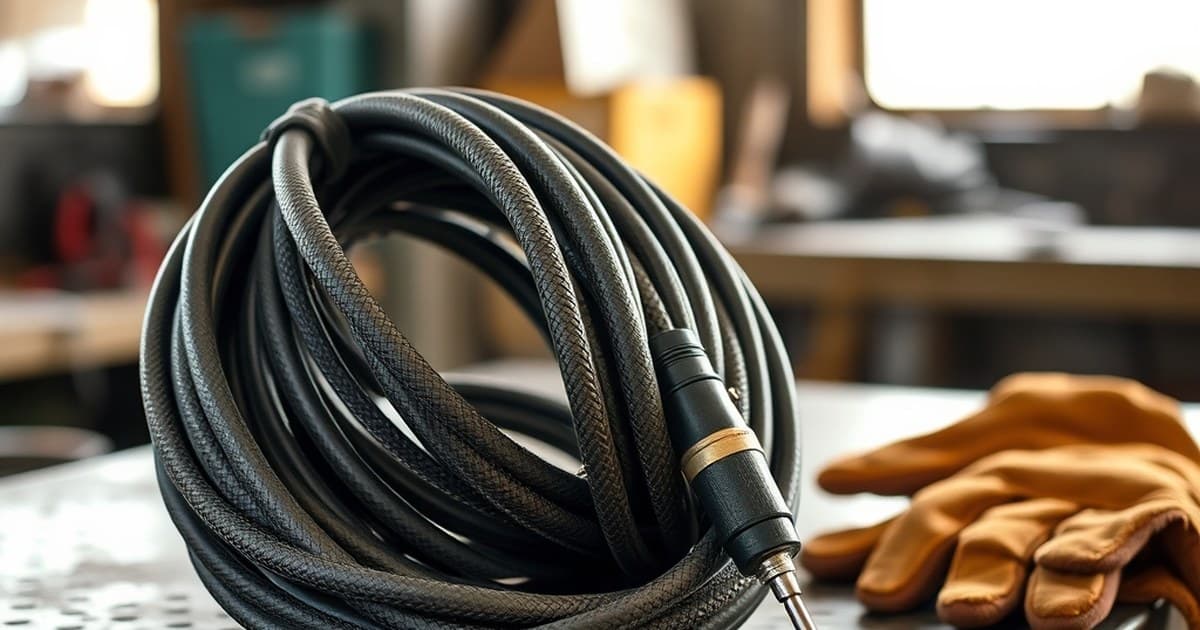
Most welders think about arc flash, fumes, and fire long before they think about electricity, yet the welding circuit itself is a live electrical system. Welding electrical safety is about understanding that circuit well enough to see where a shock can happen, and then removing those opportunities before the arc is ever struck. The good news is that most shock hazards are mundane: a nicked cable, a damp glove, a loose clamp, a machine that was never properly grounded.
This article walks through how arc welding equipment creates shock risk, what the key regulations actually require, how wet conditions and confined spaces change the picture, and a practical routine you can run before every shift. It is written for hobbyists, apprentices, and working fabricators who want a working mental model rather than a list of rules to memorize. For the wider picture of hazards beyond electricity, see our overview of welding safety 101.
Note: This is general educational information, not a substitute for your employer's procedures, the equipment manufacturer's instructions, or applicable local regulations. If you are unsure whether equipment is safe, stop and ask a qualified person.
Why the Welding Circuit Deserves Respect
An arc welder is a transformer or inverter that converts high-voltage supply power into a low-voltage, high-current output. That output is what sustains the arc. Because the voltage at the electrode is lower than the voltage in a wall outlet, many people assume the welding side is inherently harmless. That assumption is the root of a lot of careless habits.
Two things make the welding circuit different from ordinary wiring:
- It is deliberately open to the work. The electrode, the workpiece, and the work lead form a loop in which you are often standing, kneeling, or lying against the conductive path.
- It is used in harsh conditions. Cables get dragged over sharp edges, run over by carts, hit by slag, and soaked by rain or coolant.
Shock severity depends on voltage, the path current takes through the body, how long contact lasts, and how well the skin and clothing resist current. A dry, intact glove on a dry hand provides real protection. A sweaty glove on a wet steel plate may provide very little. That is why the same machine can be harmless one day and dangerous the next.
Two Separate Electrical Systems
Every welding setup has two circuits worth keeping apart in your head:
- The primary (input) circuit: the mains supply, plug, input cable, and the inside of the machine. Voltages here are much higher, and contact is typically serious.
- The secondary (welding) circuit: the electrode holder, welding cable, work lead, work clamp, and the workpiece itself.
Primary-side faults are usually caused by damaged cords, wet machines, missing covers, or poor grounding. Secondary-side shocks usually come from damaged insulation on the electrode holder or cable, or from touching the electrode and the work at the same time while the circuit is energized.
Open-Circuit Voltage: The Hidden Number
When the machine is switched on but you are not welding, the output terminals sit at the open-circuit voltage (OCV). This is higher than the arc voltage you see while welding, and it is the voltage present between the electrode and the work whenever you touch both. It matters most in stick welding, where the electrode is live as soon as it is clamped in the holder.
OSHA's general industry arc welding standard sets maximum open-circuit voltage limits for manual welding equipment: 80 volts for alternating-current machines and 100 volts for direct-current machines. The same standard also recommends reliable automatic controls that reduce no-load voltage for AC welding in wet conditions or warm surroundings where perspiration is a factor. Many modern machines include a voltage-reduction feature of this kind, but you should confirm it exists and is working on your specific unit rather than assuming.
How Shock Actually Happens in Welding
Understanding the common scenarios is more useful than memorizing abstract rules. Most welding shocks fall into a handful of patterns.
Contact With a Damaged Electrode Holder or Cable
Cracked insulation on the holder, frayed cable near the holder, or bare conductor exposed by a crushed section can turn an ordinary grip into a conductive path. Because the holder is held in the hand, any gap in insulation is directly under your fingers.
NIOSH's electrical safety toolbox talk for arc welding describes an incident of exactly this type: a worker touching exposed wires on welding cables that had been repaired improperly. The lesson it draws is about cable condition and repair quality, not about the machine.
Touching the Electrode and Work at the Same Time
With a stick electrode energized, bridging the electrode and a grounded or work-connected surface with your body completes a circuit. Reaching to change an electrode while leaning on the workpiece, or while wearing wet gloves, is a classic setup. Never change electrodes with bare skin or damp gloves, and never touch the bare electrode and the work together.
Wet, Humid, or Sweaty Conditions
Water lowers the resistance of skin, gloves, boots, and clothing, and it can create unintended conductive paths between you and grounded metal. Rain, condensation in a tank, puddles under a bench, and heavy perspiration in hot weather all increase the risk. OSHA's welding rules call for special protection against electric shock when arc welding is performed in wet conditions or high humidity.
Faulty Grounding and Return Paths
If the machine frame is not grounded correctly, a fault inside the machine can energize its enclosure. If the work lead is poorly connected, welding current may seek other routes back to the machine, through chains, ductwork, conduit, or other conductive structures. Those alternative paths can overheat, arc, and expose bystanders.
Primary-Side Faults
Damaged input cords, wet machines, and removed panels expose the high-voltage side. OSHA's operating and maintenance provisions state that machines that have become wet shall be thoroughly dried and tested before use, and that input terminals and live parts connected to input circuits must be enclosed and accessible only with tools. A "temporary" missing cover is not a minor shortcut.
Cables, Holders, and Connections: Where Most Problems Start
If you only improve one area of welding electrical safety, make it cable and connector discipline. These components take the most physical abuse and are the easiest to inspect.
What the Regulations Say About Cables
OSHA's arc welding provisions for general industry state that:
- Cables with damaged insulation or exposed bare conductors shall be replaced.
- Cables with splices within 10 feet (3 m) of the electrode holder shall not be used.
- Joining lengths of cable must be done with connecting means specifically intended for the purpose, with insulation adequate for the service conditions.
- Electrode holders not in use must be placed so they cannot make electrical contact with people, conductive objects, fuel, or compressed gas cylinders.
- The welder should not coil or loop electrode cable around parts of the body.
The construction standard adds that arc welding cables must be completely insulated, flexible types capable of handling the maximum current for the work, taking duty cycle into account. It also says that electrode holders must be specifically designed for arc welding and that their current-carrying parts and jaw outer surfaces must be fully insulated against the maximum voltage encountered to ground.
Choosing the Right Cable Size
An undersized cable runs warm or hot under load, softening insulation and eventually exposing conductors. Cable size should match the maximum current and duty cycle of your work, and longer runs generally need a larger conductor. Use the manufacturer's cable-sizing guidance for your machine instead of guessing from appearance.
Uncoil Before You Weld
OSHA's operation and maintenance provisions specifically note that coiled welding cable should be spread out before use to avoid serious overheating and damage to insulation. A cable left in a tight coil acts like an inductive heater at high current. If you only need ten feet of cable, do not leave a hundred feet bundled on the floor.
A Quick Cable Inspection Routine
Run your hands along the whole cable length with the machine off and unplugged and look for:
- Cracks, cuts, or flattened sections in the jacket
- Exposed copper strands, especially near lugs and the holder
- Heat discoloration or stiff, melted insulation near connectors
- Loose, corroded, or overheated lugs
- Improvised repairs made with ordinary tape
Anything on this list is a reason to remove the cable from service until a qualified person repairs or replaces it.
Grounding and Work Lead Practices
Grounding and the work lead are often confused, but they serve different purposes.
- The equipment ground is a safety connection that gives a fault current a controlled path so that a breaker or fuse can trip. It protects people from energized enclosures.
- The work lead (return cable) carries the welding current from the workpiece back to the machine. It is part of the working circuit, not a safety ground.
OSHA's construction standard says that the frames of arc welding machines must be grounded, either through a third wire in the supply cable or through a separate wire grounded at the source. It also states that grounding circuits other than the structure must be checked to confirm the resistance is low enough to let sufficient current flow to trip the overcurrent device.
Attach the Work Lead Close to the Weld
Place the work clamp on clean, bare metal as close to the weld area as practical. This shortens the return path and reduces the chance that current wanders through unintended routes. A poor clamp contact can also overheat and arc.
OSHA's general industry standard says that the work lead must be firmly attached to the work and that magnetic work clamps must be freed of adherent spatter on contact surfaces. It also says that all ground connections must be checked to ensure they are mechanically strong and electrically adequate for the required current.
Never Use the Wrong Return Path
Both OSHA standards place limits on what can serve as a return path:
- Chains, wire ropes, cranes, hoists, and elevators must not be used to carry welding current.
- Pipelines containing gases or flammable liquids, and conduits containing electrical circuits, must not be used as a ground return.
- Where a structure is used as a return path, the joints must make proper electrical contact, and arcing, sparks, or heat at any point means the structure should be rejected as a return path.
In practice, this means running a dedicated work lead rather than relying on whatever steel happens to be nearby. A hypothetical example: if a welder clamps the work lead to a scaffold frame and the weld is on a separate steel beam, current may travel through the scaffold joints and any bolted connections between them. Those joints were never designed to carry welding current, and they can overheat or spark.
Wet Locations, Confined Spaces, and Hot Weather
Conditions change the risk far more than the machine does. Treat these situations as requiring extra planning rather than business as usual.
Wet and Damp Work
- Keep the machine, cables, and connectors out of standing water and off wet ground.
- Use dry, undamaged gloves, and change them when they become damp.
- Insulate yourself from the workpiece and from grounded metal, using dry boards, rubber mats, or similar insulating material appropriate to the job.
- Do not weld in rain with equipment that is not rated for the environment.
- If a machine has become wet, remove it from service until it has been dried and tested by a qualified person.
Confined Spaces
Tanks, vessels, ducts, and similar spaces compound electrical risk. You may be in continuous contact with grounded metal, ventilation and heat may cause heavy sweating, and getting out quickly is harder if something goes wrong. Typical precautions include keeping the welding power source outside the space, making sure the electrode holder is removed or de-energized when you leave, and arranging for an attendant who can switch power off and summon help. Confined space entry also brings atmospheric hazards that are outside the scope of this article, so follow your site's permit procedures.
Hot, Sweaty Conditions
Sweat soaks gloves and clothing from the inside. In hot weather, swap damp gloves, keep your hands dry whenever possible, and use any voltage-reduction device your machine offers. Don't assume a dry day is a safe day: perspiration is a recognized factor in AC welding shock risk.
Process-Specific Considerations
Stick Welding (SMAW)
Stick welding has the highest exposure to the OCV problem because the electrode is energized in the holder whenever the machine is on. Take extra care when changing electrodes, and place the holder where it cannot touch you, other metal, or gas cylinders when set down.
MIG, Flux-Cored, and TIG
With MIG and flux-cored welding, the wire is typically energized only while the trigger is pressed on most machines, though you should confirm this for your specific equipment. In TIG welding, the tungsten is usually not live until the arc is initiated, but high-frequency start circuits, foot pedals, and torch cables have their own considerations. In all cases, damaged torch or gun cables, leaking connectors, and wet conditions are still the main problems.
Water-Cooled Equipment
Water-cooled torches and coolers introduce water into an electrical environment. OSHA's operation provisions state that there must be no leaks of cooling water, shielding gas, or engine fuel. A small coolant leak near live components is a shock hazard as well as a maintenance issue.
Engine-Driven Welders
Engine-driven machines may supply auxiliary power, and grounding arrangements depend on the unit and how it is used. Follow the manufacturer's instructions for grounding, and do not assume a generator frame is safely bonded just because it is outdoors.
Lockout, Maintenance, and Repairs
Opening a welding machine is not a casual task. OSHA's provisions state that equipment defects and safety hazards should be reported, use should stop until safety is assured, and repairs should be made only by qualified personnel.
Practical rules that follow from that:
- Disconnect and lock out the power source before inspecting internal components or connecting and disconnecting cables at the machine.
- Do not bypass interlocks or remove covers to make a machine "work for now."
- Let capacitors discharge according to the manufacturer's instructions, since inverter machines can store energy after being switched off.
- Have repairs done by someone qualified, not by whoever has a multimeter.
- Tag defective equipment so that the next person does not pick it up unaware.
A Pre-Weld Electrical Safety Checklist
Use a short, repeatable routine at the start of each shift or job. This is a general example; adapt it to your equipment and workplace.
- Machine is the right size for the job and rated for the environment
- Input cord, plug, and receptacle are undamaged, and the machine is grounded as the manufacturer specifies
- Machine covers and panels are in place
- Cables are uncoiled, free of cuts and exposed conductors, with no splices near the electrode holder
- Electrode holder insulation is intact
- Work lead is clamped to clean metal close to the weld
- No chains, cranes, pipelines, or conduit are serving as a return path
- Gloves are dry and undamaged, and footwear and clothing are dry
- Standing surface is dry and, where needed, insulated
- Nobody can contact the electrode holder when it is set down
- A way to shut off power quickly is within reach
Common Mistakes That Lead to Shocks
- Repairing cable with ordinary tape and carrying on. Cable repairs must provide insulation equal to the cable, which tape rarely does.
- Leaving the holder energized while stepping away, or hooking it over a metal rail.
- Wearing the cable wrapped around an arm or shoulder, which puts live conductor against the body.
- Working in wet gloves to finish "one last pass."
- Clamping to the nearest convenient metal without thinking about where the current will go.
- Ignoring a tingle. A mild shock or tingling feeling is a warning that something is wrong and should be investigated before welding continues.
- Assuming low voltage means low risk. Voltage limits reduce risk, but they do not eliminate it, especially in damp conditions.
What to Do After an Electric Shock
Any suspected electric shock deserves to be taken seriously, even if the person seems fine afterward.
- Do not touch the person while they may still be in contact with the energized circuit. Switch off power at the machine or disconnect point if you can do so safely.
- Call emergency services and follow your site's emergency procedures.
- Provide first aid within your training, including CPR if appropriate, once the scene is safe.
- Report the incident and remove the equipment from service for inspection.
Electrical injuries can involve internal damage that is not obvious on the surface, so medical evaluation after a significant shock is generally recommended.
Training, Supervision, and Culture
OSHA's general industry standard says that workers designated to operate arc welding equipment shall be properly instructed and qualified, and that they should be acquainted with the standard's requirements and the manufacturer's printed instructions. OSHA's electrical overview also lists insulation, guarding, grounding, electrical protective devices, and safe work practices as the main ways to control electrical hazards in the workplace.
For shops and crews, that translates into a few habits:
- Make cable inspection part of the daily routine, not an annual audit.
- Give welders the authority to tag out damaged equipment without penalty.
- Keep spare cables, holders, and connectors in stock so that the "just one more day" repair is unnecessary.
- Review near-misses, including tingles and warm connectors, as seriously as injuries.
Conclusion
Electrical injury in welding is rarely mysterious. It tends to come from damaged insulation, wet conditions, poor grounding, improvised repairs, and the assumption that a low-voltage circuit cannot hurt anyone. Each of those can be managed with simple, repeatable habits: inspect cables, keep the holder and your gloves dry and intact, ground the machine properly, clamp the work lead close to the weld, and never use structures or equipment as an unplanned return path.
If you adopt only one change, make it a thirty-second pre-weld check. It costs almost nothing, and it addresses the failures that show up again and again in safety guidance. Treat any shock, however mild, as a signal to stop and fix the cause.
Frequently asked questions
Can you get electrocuted from a welder?
Yes. Welding equipment has both a high-voltage input side and a lower-voltage but high-current output side, and either can cause serious injury under the wrong conditions. Risk rises sharply with wet conditions, damaged insulation, and poor grounding.
Is stick welding more dangerous electrically than MIG or TIG?
Stick welding exposes the welder to the open-circuit voltage whenever the electrode is clamped and the machine is on, so changing electrodes carries specific shock risk. MIG, flux-cored, and TIG have their own hazards, but the wire or tungsten is generally not energized until the arc is started. The details depend on the machine, so check your manufacturer's instructions.
What is open-circuit voltage in welding?
It is the voltage between the output terminals when the machine is on but no arc is present. It is higher than the arc voltage, and it is what you may be exposed to if you touch the electrode and the work together. OSHA sets maximum values for manual welding of 80 volts AC and 100 volts DC.
Is AC or DC welding safer from a shock standpoint?
Neither is safe in all conditions. OSHA's standard notes that for AC welding in wet conditions or warm surroundings where perspiration is a factor, reliable automatic controls that reduce no-load voltage are recommended to reduce shock hazard. Whatever the current type, equipment condition and working conditions matter most.
How often should welding cables be inspected?
At minimum, visually check them before each shift or job and any time they are dragged, crushed, or exposed to heat or moisture. A closer check along the full length with the machine unplugged is a good habit on a regular schedule set by your workplace.
Can I repair a damaged welding cable myself?
Minor jacket damage on a section well away from the holder may be repairable with insulation of equivalent quality, but cables with exposed conductors are generally supposed to be replaced. Cables should only be joined with connectors designed for the purpose. When in doubt, replace the cable or have a qualified person repair it.
Is it safe to weld in the rain?
Generally no, unless the equipment is specifically rated and set up for it and appropriate precautions are in place. Wet gloves, wet ground, and wet machines all increase shock risk, and OSHA requires special protection against electric shock in wet or highly humid conditions.
Do I need rubber-soled boots for welding?
Dry, intact, insulating footwear is a sensible part of electrical protection, along with dry gloves and clothing. Boots help only while they stay dry and undamaged, so they should be combined with a dry standing surface and good equipment condition rather than relied on by themselves.
Where should the work clamp go?
On clean, bare metal as close to the weld as is practical, firmly attached, with spatter cleaned off the contact surface. Avoid routing current through chains, cranes, pipelines, conduit, or structural joints that were not designed to carry it.
What should I do if I feel a tingle while welding?
Stop welding, switch off the machine, and investigate. A tingle can indicate damaged insulation, a wet glove, a bad ground, or a leaking connection. Do not resume until the cause is found and fixed.
References
- 29 CFR 1910.254 - Arc welding and cutting - Occupational Safety and Health Administration, U.S. Department of Labor. Source for voltage limits, cable, grounding, and maintenance requirements in general industry.
- 29 CFR 1926.351 - Arc welding and cutting - Occupational Safety and Health Administration, U.S. Department of Labor. Source for holder, cable, and return-path requirements in construction.
- Electrical Safety and Arc Welding Toolbox Talk (2022-128) - NIOSH and CPWR, 2022. Incident-based guidance on cable condition and electrical safety.
- Occupational Safety and Health Administration, Electrical - Overview - Occupational Safety and Health Administration, accessed 2026-11-02.
- National Institute for Occupational Safety and Health, Safety and Health in Arc Welding and Gas Welding and Cutting (78-138) - CDC NIOSH archive, accessed 2026-11-02.