
Welding Fire Safety and Hot Work Permits
How hot work permits, combustible clearance, fire watch, and tank checks prevent welding fires, and why published fire watch durations differ.

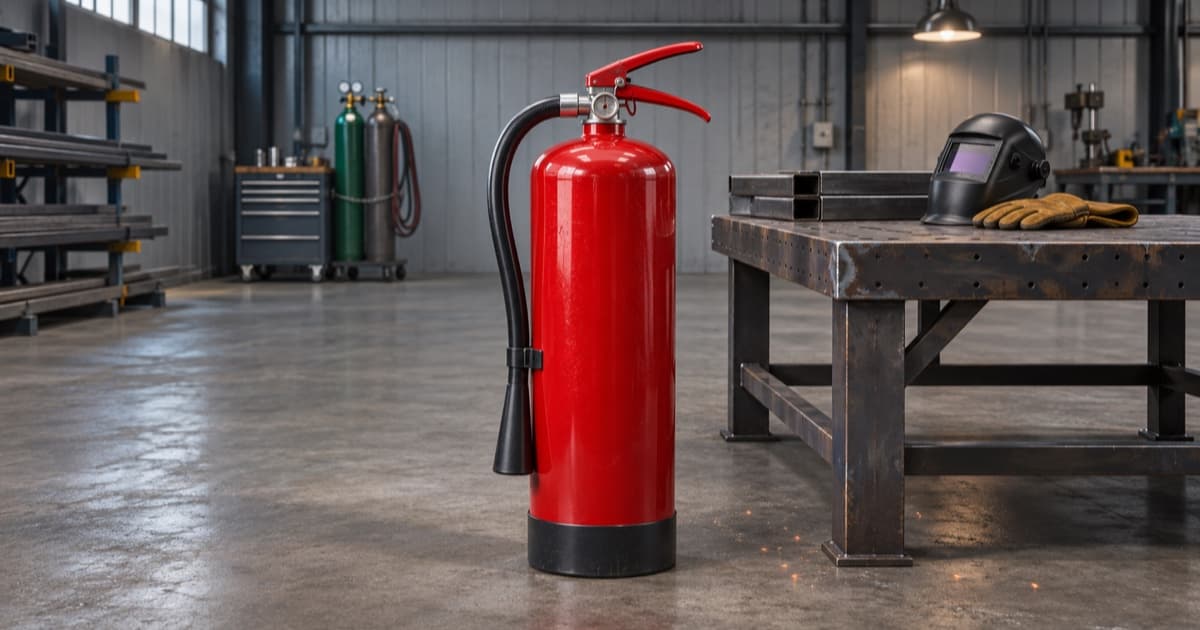
A hot work permit is the authorization step that comes before welding or cutting in a place where sparks or heat could start a fire. Hot work is any process that generates flames, sparks, or heat, including welding, cutting, grinding, and sawing.
Good welding fire safety depends on what happens before the arc starts and after it stops. Tanks, drums, and air that looks clean from the outside are where those checks matter most.
What a hot work permit has to cover
Canadian guidance notes that fires are often the result of the "quick five-minute" job in an area not intended for welding or cutting. A permit exists to stop a short job from skipping the checks a long one would get.
The US general industry welding standard (29 CFR 1910.252) asks for an authorized person to inspect the work area, decide which precautions apply, and then authorize the work. The standard prefers that this authorization be in writing.
Clear the area and protect what cannot move
The same standard says that combustible material should be moved at least 35 feet (10.7 meters) away from the work where that is practical. Material that cannot be moved has to be protected.
A clear floor is not enough if sparks can reach a neighboring room. One university hot work program requires openings or cracks in walls, floors, ducts, or shafts to be tightly covered, so that sparks cannot pass to adjacent or hidden areas.
Fire extinguishing equipment must be ready for instant use. Depending on how much combustible material is exposed, the standard accepts any of these:
- pails of water
- buckets of sand
- hoses
- portable extinguishers
A campus procedure is more specific: where appreciable combustible or flammable material is within 35 feet of the hot work, a properly maintained extinguisher of the appropriate hazard class is required.
Fire watch: when it starts and how long it lasts
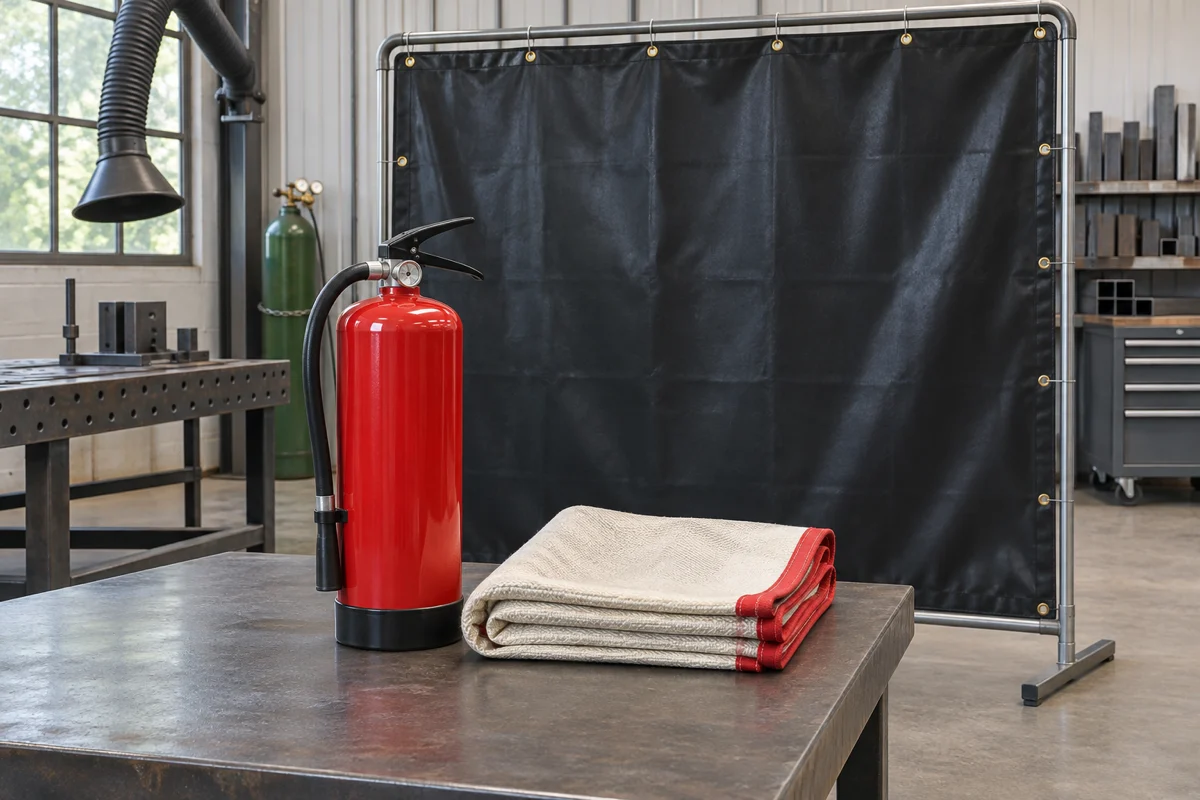
A fire watch is needed where hot work cannot be carried out in a safe area, or where combustible material cannot be removed from the work area. In that case, the watch should run during and after the hot work.
One university procedure requires the fire watch to begin before hot work commences and to continue for at least 30 minutes after it stops. The permit issuer can extend that period based on the hazards present. Published durations do not agree, and the table below shows how far they spread. They come from different jurisdictions and institutions, so they are not interchangeable.
| Guidance | Minimum watch after the work | Notes |
|---|---|---|
| US welding standard | Half an hour | Where a fire watch is required |
| Two US university hot work programs | 30 minutes | One requires a fire watch log when a project runs more than four hours |
| UK guidance for welding | 30 minutes | Extended to 60 minutes where an ignition may be hard to detect or slow to develop |
| UK guidance for construction | At least one hour, continuous | One more check two hours after the work ends |
| Canadian guidance | At least 60 minutes | Monitoring may need to run three hours or more, depending on the work |
Tanks and drums: residues outlast gas-freeing
Tanks and drums are easy to underestimate because what is inside them is often invisible or not what you expect. In 2008 an explosion occurred inside an 80-foot storage tank at a corrugated cardboard mill while welding was under way. Three workers died, and a fourth was injured. Investigators found that the tank held recycled pulp and water that broke down and produced flammable hydrogen. That case was a gas-generation problem rather than a leftover-residue one, but it shows how a tank can hold a flammable atmosphere nobody sees.
Drums bring the residue problem. Tanks and drums that seem empty usually still have residues in the bottom, in seams, and in other crevices. UK guidance says gas-freeing on its own is rarely adequate, because residues stay trapped in those spots. It also warns that just a teaspoon of petrol in a drum can be enough to cause an explosion when heated and turned into vapor.
The US welding standard sets the matching rule. It does not allow welding or cutting on used drums or tanks until they have been cleaned so thoroughly as to make absolutely certain no flammable material is present, including substances that could give off flammable or toxic vapor when heated.
Testing the air: what a gauge outside the tank misses
Measuring the air above a tank tells you little about the air inside it. In a US investigation of a fatal hot work explosion at a facility in Buffalo, New York, staff monitored the atmosphere above the tank, but not for flammable vapor inside it. The investigator also said the permits were authorized by employees unfamiliar with the specific hazards of the process.
Canadian guidance is more direct. It says to eliminate explosive atmospheres, such as vapors or combustible dust, or not to allow hot work at all. Where a process can produce combustible atmospheres, it says to shut that process down and monitor the area continuously for combustible gas buildup before, during, and after hot work.
The US confined space standard uses a related number. For permit-required confined spaces, a flammable gas, vapor, or mist above 10 percent of its lower flammable limit counts as a hazardous atmosphere. That threshold belongs to confined space entry. It is not a general pass mark for every hot work job, and it should not be read that way.
When a permit stops being valid
A permit describes the conditions that existed when it was written. One university procedure cancels the permit if conditions change or something unforeseen happens. The work and its controls are then reevaluated, and a new permit is issued.
Another procedure is stricter about time. It says a suspended permit must be reissued, and no permit is valid for more than one shift. If work is interrupted for more than one hour, the equipment and the area must be checked again before work resumes.
Frequently asked questions
What must an OSHA fire prevention plan include?
The US fire prevention plan rule (29 CFR 1910.39) asks for a written plan that lists the fire hazards, the ignition sources, the controls for them, and the fire extinguishing equipment. A plan is required when an OSHA standard calls for one (1910.39(a)).
References
- Welding, Cutting and Brazing: General Requirements (1910.252) - Occupational Safety and Health Administration
- Fire prevention plans (1910.39) - Occupational Safety and Health Administration
- Permit-required confined spaces (1910.146) - Occupational Safety and Health Administration
- Safety risks from welding - Health and Safety Executive
- Cutting up or repairing tanks, drums or other containers (INDG314) - Health and Safety Executive
- Fire safety in construction (HSG168) - Health and Safety Executive
- Welding - Hot Work - Canadian Centre for Occupational Health and Safety
- Hot Work Program - California State University, Northridge
- Welding and Hot Work - State University of New York at Purchase
- Hot Work Permit Procedure - Ball State University
- Packaging Corporation Storage Tank Explosion - U.S. Chemical Safety Board
- CSB Releases New Safety Video on Fatal Hot Work Explosion at DuPont Facility in Buffalo - U.S. Chemical Safety Board