
Welding Safety 101
A complete guide to welding PPE: helmets, filter shades, FR clothing, gloves, respirators, and the standards that keep welders safe from arc, heat, and fumes.

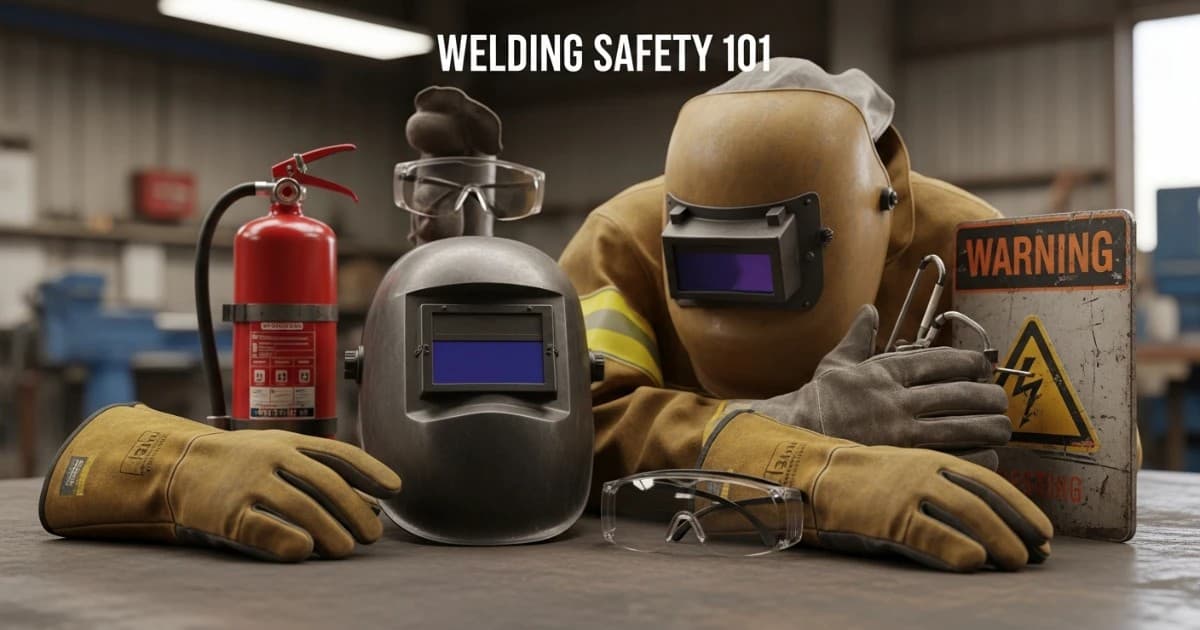
Welding puts a small, intensely hot industrial process inches from your face, hands, and lungs. The arc burns hotter than the surface of many furnaces, throws ultraviolet and infrared light in every direction, sprays molten metal, and lifts a plume of metal oxides into your breathing zone. The right welding PPE is what stands between all of that and your body, and choosing it well is less about buying the most expensive gear than about matching each piece to the specific hazards of the job in front of you.
This guide walks through every layer of protection a welder needs, from the helmet shade on your face to the boots on your feet, and explains the reasoning and standards behind each choice. The goal is not just a shopping list but the judgment to know why a shade 10 lens matters, when a respirator becomes non-negotiable, and which common shortcuts quietly cause the most injuries.
Why Welding PPE Matters More Than People Think
The hazards of welding fall into a few broad families, and PPE exists to answer each one. Understanding them makes every equipment choice obvious rather than arbitrary.
Radiant energy is the hazard people underestimate most. A welding arc emits intense ultraviolet, visible, and infrared radiation. UV exposure of less than a minute can cause arc eye, also called welder's flash or photokeratitis, a painful inflammation of the cornea whose symptoms often arrive hours later as a gritty, burning sensation, tearing, and blurred vision. Crucially, you do not have to be the one holding the torch; simply being near an unshielded arc can burn your eyes and skin. Infrared can contribute to cataracts over a career, and the same UV that burns eyes also burns exposed skin like a sunburn.
Heat, sparks, and molten metal are the visible dangers. Spatter can reach well over a thousand degrees, roll into a fold of clothing, and burn through in seconds. Hot slag, grinding sparks, and the workpiece itself all cause contact burns.
Fumes and gases are the slow, serious hazard. Welding vaporizes metal, which condenses into a fine fume of metal oxides small enough to reach deep into the lungs. In 2017 the International Agency for Research on Cancer reclassified welding fumes as a Group 1 carcinogen, meaning there is sufficient evidence that they cause cancer in humans, specifically lung cancer. Beyond cancer, fumes can cause metal fume fever, occupational asthma, chronic respiratory disease, and, in the case of manganese, neurological effects.
Electric shock, noise, and physical hazards round out the picture. Even the relatively low voltages used in welding can deliver a fatal current under the wrong conditions, and damp environments raise the risk sharply. Grinding and mechanized processes routinely exceed the noise levels at which hearing protection becomes necessary. Falling objects and heavy stock threaten the feet.
No single item addresses all of this, which is why welding PPE is a layered system. Skip a layer and you simply leave one hazard family unanswered.
Head, Face, and Eye Protection
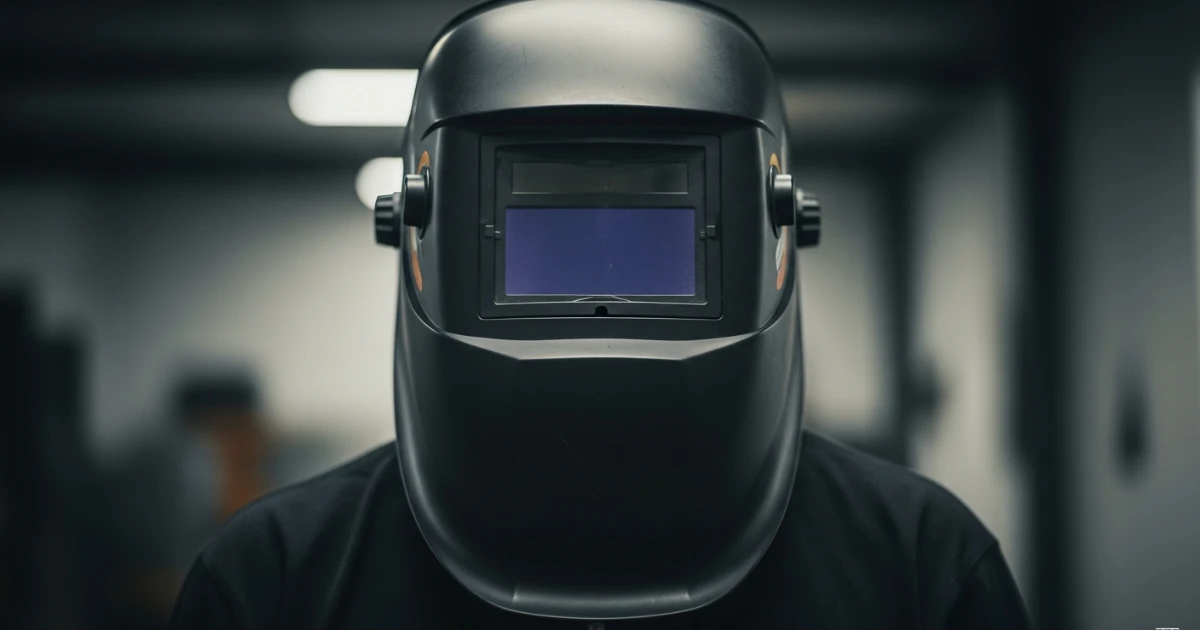
The welding helmet is the centerpiece of a welder's PPE, and it does more than most people realize: it shields the eyes, face, and neck from radiation, protects against spatter and flying particles, and blocks the UV that would otherwise cause arc eye within moments.
Understanding filter shades
The dark lens in a helmet is rated by a shade number, a scale that runs from about 2 to 14. Higher numbers block more light. Too light a shade lets harmful radiation through and strains the eyes; too dark a shade forces you to move your face closer to see the puddle, defeating the purpose. The correct shade depends primarily on the process and the amperage.
As a practical starting point:
- Oxy-fuel gas welding and torch brazing: shade 3 to 6
- Oxygen cutting: shade 3 to 6 depending on thickness
- Shielded metal arc (stick) welding: shade 8 to 12 by amperage
- Gas metal arc (MIG) and flux-cored welding: shade 10 to 12
- Gas tungsten arc (TIG) welding: shade 8 to 12 These ranges reflect the guidance in OSHA's regulations and the ANSI consensus behind them. Within a range, start darker and step to a lighter shade only until you can see the weld zone clearly without discomfort. Filter lenses should carry a permanent marking identifying their shade, and they must meet the transmission requirements of the ANSI/ISEA Z87.1 standard.
Fixed versus auto-darkening lenses
A passive helmet uses a single fixed-shade lens; you nod the helmet down before striking the arc. It is durable, inexpensive, and reliable, but the ritual of flipping it down encourages tack welds struck "blind," a frequent cause of flash burns.
An auto-darkening filter (ADF) uses a liquid-crystal lens with light sensors that switch from a light state to the selected dark shade in a fraction of a millisecond when the arc strikes. Good auto-darkening helmets let you set the shade, sensitivity, and delay, and many are powered by a solar cell with a battery backup. They make it far easier to position work accurately and reduce the temptation to weld without the lens in place. The tradeoff is cost and the need to verify the lens actually reaches full shade and responds reliably; a failing sensor or dead battery is a real hazard.
Safety glasses under the hood
A helmet is not a substitute for safety glasses. Welders should wear ANSI Z87.1-rated safety glasses with side shields underneath the helmet, because the moment the hood goes up for chipping slag or grinding, the eyes are exposed to flying particles. This layered eye protection is one of the most commonly skipped basics and one of the easiest to fix.
Flame-Resistant Clothing and Body Protection
Everyday work clothes are a liability at the welding bench. The core principle is simple: clothing must resist ignition, refuse to melt, and self-extinguish once the spark source is removed.
What to wear
The proven materials are leather, flame-resistant (FR) cotton, and aramid fibers such as those sold under the Nomex and Kevlar names. Leather has been the industry benchmark for heavy work because it is naturally flame-resistant, thick, and tough enough to shrug off spatter. FR-treated cotton is lighter and more breathable for lower-intensity work. Aramids offer flame resistance built into the fiber along with a strong strength-to-weight ratio.
Relevant garments include a welding jacket or FR long-sleeve shirt, FR pants, a leather apron for heavy work, and leather sleeves or a cape for overhead welding where sparks rain down. Welding protective clothing is addressed by standards such as ANSI Z49.1 in the United States and EN ISO 11611 internationally, which call for flame-resistant, non-melting fabrics.
What never to wear
Synthetic fabrics like untreated polyester and nylon are dangerous around welding because they melt when exposed to heat and can fuse to the skin, turning a minor burn into a severe one. They should never be worn as outer layers in a welding environment. Even the fabric near your skin matters, since a synthetic base layer can melt under FR clothing.
A subtle but important point: FR cotton is not permanently flame-resistant. Its treatment degrades over dozens of wash cycles, so garments need inspection and eventual replacement rather than indefinite use.
Cover the gaps
Coverage detail is where many burns actually happen. Keep collars buttoned and sleeves down, never rolled. Keep pants over the top of boots rather than tucked in, so sparks roll off instead of into your footwear. Avoid cuffs, frayed edges, and open pockets, all of which catch hot metal. The best jacket in the world fails if a rolled sleeve creates a pocket for spatter to collect.
Hand Protection
Welding gloves take direct heat, spatter, UV, and the occasional sharp edge, and the right glove depends on the process. Heavy stick and MIG welding call for thick, stiff, insulated gloves that prioritize protection over feel. TIG welding, which demands fine finger control to feed filler rod, uses thinner, more flexible gloves, usually goatskin or kidskin, that trade some heat resistance for dexterity.
Gloves should be flame-resistant leather, cover the wrist and forearm gauntlet-style, and be kept dry. Dryness matters for two reasons: wet gloves conduct electricity, raising shock risk, and moisture trapped inside can flash to steam against hot metal. Inspect gloves for holes, cracks, and worn spots, and retire them once the leather is compromised, since a pinhole in the palm is enough to let spatter through.
Respiratory Protection
Respiratory protection is the layer welders most often neglect and the one with the gravest long-term stakes. The hierarchy of controls comes first: the best defense against fume is to remove it at the source with local exhaust ventilation or to work in well-ventilated space. Respirators are the last line, used when ventilation cannot bring exposure low enough or as added protection for high-risk work.
The hazard scales sharply with the material. Mild steel produces predominantly iron oxide fume, which is harmful in quantity but less acutely toxic. Stainless steel and high-alloy work is a different category, because it generates fume rich in hexavalent chromium and nickel, both classified as Group 1 human carcinogens. Galvanized and coated steels release zinc and other metals that cause metal fume fever, and manganese, present in many filler metals, is linked to neurological harm at chronic exposure.
Matching the respirator to the exposure matters:
- For general fume where ventilation is adequate but supplementary protection is wanted, an N95 or better disposable respirator rated for welding fume may suffice for mild steel.
- For stainless steel, coated metals, or confined spaces, a tight-fitting half or full-face respirator with P100 or HEPA filters is the appropriate baseline.
- For high or uncertain exposures and for workers who cannot achieve a good facepiece seal, a powered air-purifying respirator (PAPR), often integrated into the welding helmet, provides a higher protection factor and does not require a tight seal against the face. Any tight-fitting respirator requires fit testing and a clean-shaven seal to work as designed. A respirator worn over stubble offers a false sense of security, since fume simply leaks around the gaps.
Foot, Hearing, and Additional Protection
Foot protection means sturdy leather boots, ideally with safety toes and without exposed synthetic mesh that could melt. Metatarsal guards add protection where heavy stock is handled. Pants worn over the boot top keep sparks from dropping inside, a detail worth repeating because burns to the top of the foot are common and entirely preventable.
Hearing protection becomes necessary when noise approaches or exceeds 85 decibels, a threshold routinely crossed during grinding, air arc gouging, and plasma cutting. Earplugs also physically block sparks from entering the ear canal during overhead work, a secondary benefit that matters more than it sounds.
Electric shock protection is a matter of habit as much as gear. Keep gloves and clothing dry, stand on a dry insulating surface such as a rubber mat or dry board when working in damp conditions, and never weld while any part of your body completes a circuit to the workpiece or ground. Because even a tenth of an amp can be fatal, the margin for carelessness is thin.
Depending on the environment, a welder may also need a respirator plus welding respirator combination, a hard hat where overhead hazards exist, and a fire-resistant skullcap or welding beanie to protect the scalp under the helmet.
Common PPE Mistakes That Cause Injuries
The injuries that show up in welding are rarely caused by missing equipment altogether. More often they come from small errors in how gear is worn or maintained.
Rolling up sleeves or pant cuffs is the classic example: the fold becomes a shelf that catches spatter and holds it against the fabric until it burns through. Tucking pants into boots does the same thing lower down. Striking a tack weld with the helmet up, trusting a quick glance, is how a large share of flash burns happen. Skipping safety glasses under the hood leaves the eyes exposed the instant the helmet lifts. Wearing a respirator over facial hair breaks the seal it depends on. Treating FR clothing as permanent ignores the fact that its protection wears out. And relying on a disposable dust mask for stainless steel fume provides essentially no protection against hexavalent chromium.
Each of these is easy to correct once you see it as a hazard rather than a habit, and correcting them costs nothing.
Building and Maintaining Your PPE System
Good PPE is a system that gets inspected, not a purchase that gets forgotten. Before each shift, check the helmet lens for cracks and confirm an auto-darkening filter switches fully and quickly. Look over gloves and jackets for holes, thin spots, and singed areas. Inspect respirator straps, valves, and filters, and confirm the seal. Replace anything compromised rather than nursing it along, because damaged PPE offers protection that exists mostly on paper.
Fit and comfort are not luxuries. PPE that is too hot, too heavy, or too awkward gets removed or worked around, and the best gear is the gear a welder will actually keep on for eight hours. That argues for investing in a comfortable auto-darkening helmet, breathable FR clothing suited to the climate, and, where fume is serious, a PAPR that cools the face while it protects the lungs.
Conclusion
Welding PPE works because it answers each hazard in turn: a correctly shaded helmet and safety glasses for radiation and impact, FR clothing and leather for heat and spatter, gloves matched to the process, and, most importantly for long-term health, ventilation and the right respirator for fume. The material you weld drives some of the biggest decisions, especially the jump in respiratory protection required for stainless steel and coated metals.
If you take one principle away, let it be this: match the protection to the specific job, wear it correctly with no gaps or shortcuts, and inspect it as routinely as you check your machine settings. The equipment is only as good as the discipline behind it, and that discipline is what turns a lifetime of welding into a long career rather than a slow accumulation of preventable harm.
Frequently asked questions
What PPE is required for welding?
At minimum, a welder needs a welding helmet with the correct filter shade, safety glasses with side shields underneath it, flame-resistant clothing that covers the arms and torso, welding gloves, sturdy leather boots, and respiratory protection appropriate to the material and ventilation. Hearing protection is added when noise is high, and additional items like a PAPR or leather apron are used for specific jobs.
What shade lens do I need for welding?
The shade depends on the process and amperage. Oxy-fuel welding and brazing generally use shade 3 to 6, stick welding around shade 8 to 12, MIG and flux-cored welding around shade 10 to 12, and TIG welding around shade 8 to 12. Start with a darker shade and move lighter only until you can see the weld pool clearly without eye strain.
Are auto-darkening welding helmets safe?
Yes, when they function correctly. A quality auto-darkening filter switches to the set shade in a fraction of a millisecond and protects the eyes as well as a fixed lens while making the work easier. The key is to verify the lens darkens fully and reliably, keep the battery charged, and replace any filter whose sensors respond slowly or inconsistently.
Can welding fumes cause cancer?
Yes. The International Agency for Research on Cancer classifies welding fumes as a Group 1 human carcinogen, with sufficient evidence linking them to lung cancer. Fume from stainless steel and other alloys is especially hazardous because it contains hexavalent chromium and nickel, which are themselves recognized carcinogens.
What kind of respirator do I need for welding?
It depends on the material and ventilation. Mild steel with good ventilation may be handled with a welding-rated N95 or better disposable respirator, but stainless steel, coated metals, and confined spaces call for a tight-fitting respirator with P100 or HEPA filters, or a powered air-purifying respirator (PAPR). Any tight-fitting respirator requires fit testing and a clean-shaven seal.
Why can't I wear regular clothes or synthetic fabrics while welding?
Synthetic fabrics such as untreated polyester and nylon melt when exposed to welding heat and can fuse to the skin, worsening burns. Everyday cotton can also ignite. Welding clothing should be leather, flame-resistant cotton, or aramid fibers that resist ignition, do not melt, and self-extinguish.
Do I need eye protection if I'm just watching someone weld?
Yes. The ultraviolet light from a welding arc can cause arc eye in bystanders, not just the welder, and even brief exposure is enough. Anyone near an active arc needs appropriate shaded protection or should be shielded from the arc by a screen or curtain.
How do I prevent arc eye (welder's flash)?
Always have the correct filter shade in place before striking the arc, never tack weld with the helmet raised, wear safety glasses underneath the helmet, and shield the work area so the arc does not reach unprotected eyes nearby. Symptoms often appear hours after exposure, so protection has to be in place every time, not just when discomfort is felt.
How often should I replace or inspect my welding PPE?
Inspect PPE before every shift for cracks, holes, worn spots, and, for auto-darkening helmets, proper function. Retire gloves, jackets, and lenses as soon as they are compromised. Flame-resistant cotton loses its protection over many wash cycles, so it needs periodic replacement, and respirator filters should be changed according to the manufacturer's schedule and whenever breathing resistance increases.
Is welding gear enough to protect against electric shock?
PPE helps but does not replace safe work practices. Keep gloves and clothing dry, since moisture conducts electricity, and stand on a dry insulating surface in damp conditions. Because even a tenth of an amp can be fatal, avoid completing a circuit through your body and follow proper equipment grounding and setup.
References
- 1910.252 - Welding, Cutting, and Brazing, General Requirements - U.S. Occupational Safety and Health Administration. Federal requirements for eye protection, filter shades, and protective equipment.
- Welding, Cutting, and Brazing - Hazards and Solutions - U.S. Occupational Safety and Health Administration, accessed 2026-07-15.
- Welding - Personal Protective Equipment and Clothing - Canadian Centre for Occupational Health and Safety, accessed 2026-07-15.
- Eye Protection during Welding (FactSheet) - U.S. Occupational Safety and Health Administration. Guidance on radiant energy and filter lens selection.
- The effect of occupational exposure to welding fumes on trachea, bronchus and lung cancer: A systematic review and meta-analysis from the WHO/ILO Joint Estimates - Environment International (PubMed), 2022. Evidence linking welding fume exposure to lung cancer.
- Welding and brazing fumes and lung cancer risk: a systematic review and meta-analysis - Journal of Occupational Medicine and Toxicology, 2026.
- Welding Fumes, a Risk Factor for Lung Diseases - International Journal of Environmental Research and Public Health, 2020.
- Welding, Cutting and Brazing General Requirements Checklist - National Institute for Occupational Safety and Health (NIOSH), accessed 2026-07-15.