
Welding Galvanized Steel Safely
Welding galvanized steel releases zinc oxide fume. Learn how to prepare the joint, control fume, avoid metal fume fever and restore corrosion protection.

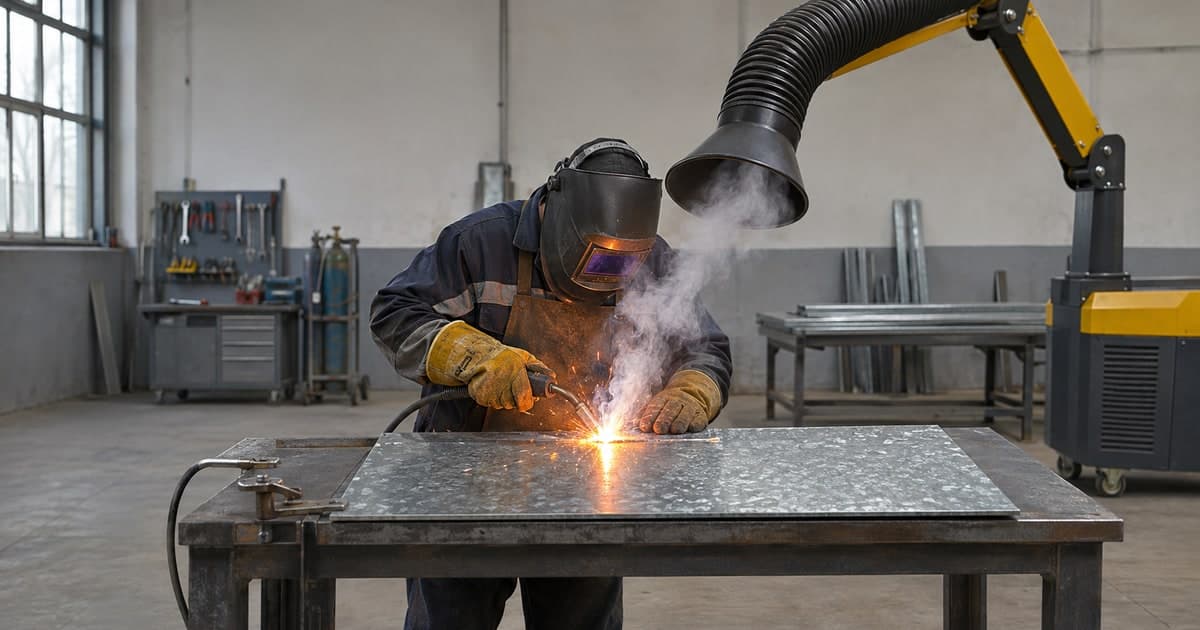
Welding galvanized steel is routine work in fabrication shops, farms, garages and construction sites, and it is also one of the quickest ways to get sick from your own workshop. The zinc coating that protects the steel from rust vaporises in the arc and turns into a dense white fume. Breathed in enough, that fume causes the flu-like illness known as metal fume fever, and it travels well beyond the weld area.
The good news is that the hazard is predictable. If you know what the coating does, how to prepare the joint, and how to keep the plume away from your face, galvanized work becomes manageable. This guide covers the chemistry, the health effects, joint preparation, process choice, ventilation and respiratory protection, weld quality problems, and how to restore corrosion protection afterwards.
Why Galvanized Steel Is Different to Weld
Galvanized steel is carbon steel with a zinc layer, most often applied by hot-dip galvanizing or electro-galvanizing. Zinc boils at a much lower temperature than steel melts. Inside and around the weld pool the coating therefore does not simply burn off: it flashes into vapour, oxidises in the air and condenses into very fine particles of zinc oxide.
Three practical consequences follow:
- More fume, and fume with a specific toxic effect. Plain mild steel fume is mostly iron oxides. Galvanized work adds zinc oxide on top.
- A less stable weld. Zinc vapour escaping from the joint disturbs the arc and can be trapped in the weld metal.
- Damaged corrosion protection. The coating near the weld is destroyed, so the finished joint needs treatment.
The zinc layer also does not stay where you can see it. Coating on the back of a joint, on the inside of a tube or underneath a lap is heated just as much as the surface you are welding, which is why checking only the visible face is a classic mistake.
What Is in the Fume and What It Does to You
Occupational health sources identify zinc oxide, from zinc-enriched paints and galvanized steel, as the usual cause of metal fume fever. Welding on coated metal can also release other contaminants depending on what else is on the surface, including oil residues, paint, chromate treatments and, on some older or plated parts, cadmium or lead.
Metal fume fever
Metal fume fever is a short-lived illness that typically starts some hours after exposure, often in the evening or overnight. Reported symptoms include:
- fever and chills
- a metallic or sweet taste in the mouth
- dry throat and cough
- nausea, headache and muscle aches
- fatigue
Occupational sources describe the symptoms as lasting around a day, with recovery typically within one to two days. Because it resembles influenza and appears after the shift, people often blame a cold. The clinical literature also notes that it has long been nicknamed "Monday morning fever", since symptoms can reappear after a break from exposure.
Short-lived does not mean harmless. Metal fume fever is a warning that you breathed far too much fume. It sits on top of the general long-term risks of welding fume, which health agencies treat seriously. If symptoms are severe, or you have breathing difficulty, seek medical advice and tell the clinician what you were welding.
Cadmium and other hidden hazards
One hazard needs special mention. Cadmium-plated steel can cause acute poisoning without obvious warning symptoms, which is very different from the unpleasant but self-limiting zinc fever. Yellow-ish or bronze-ish plated fasteners, some older hardware and certain plated parts are the typical suspects. If you cannot identify the coating, do not weld or cut it until you can.
Identify the Coating Before You Strike an Arc
Not every shiny or grey part is plain zinc. A short identification routine takes a minute and prevents the worst surprises:
- Check drawings, purchase documents or the supplier's data sheet for the coating type.
- Look for the typical spangled or matte grey finish of hot-dip galvanizing versus the uniform, smooth look of electro-plated parts.
- Ask whether the part has also been painted, primed or passivated, since each adds its own fumes.
- Treat unknown plated hardware as hazardous until identified.
For the wider picture of how regulators set and apply numeric limits, and why compliance with a number is not the same as being safe, read our explanation of welding fume exposure limits.
Prepare the Joint: Remove the Zinc Where You Weld
The single most effective step under your direct control is to take the zinc out of the weld zone before welding. Safety guidance from occupational health bodies is consistent that removing coating from the weld area reduces fume, and it improves weld quality too.
How far back to clean
A common recommendation from the galvanizing industry, which is an interested party but references the relevant welding specification, is to remove the zinc for roughly 1 to 4 inches (25 to 100 mm) on either side of the intended weld, and on both faces of the workpiece. Use the generous end of that range for thicker steel, higher heat input and full-penetration joints.
Figure 1 shows the zinc-free zone around a typical joint, including the back face that is easy to forget.
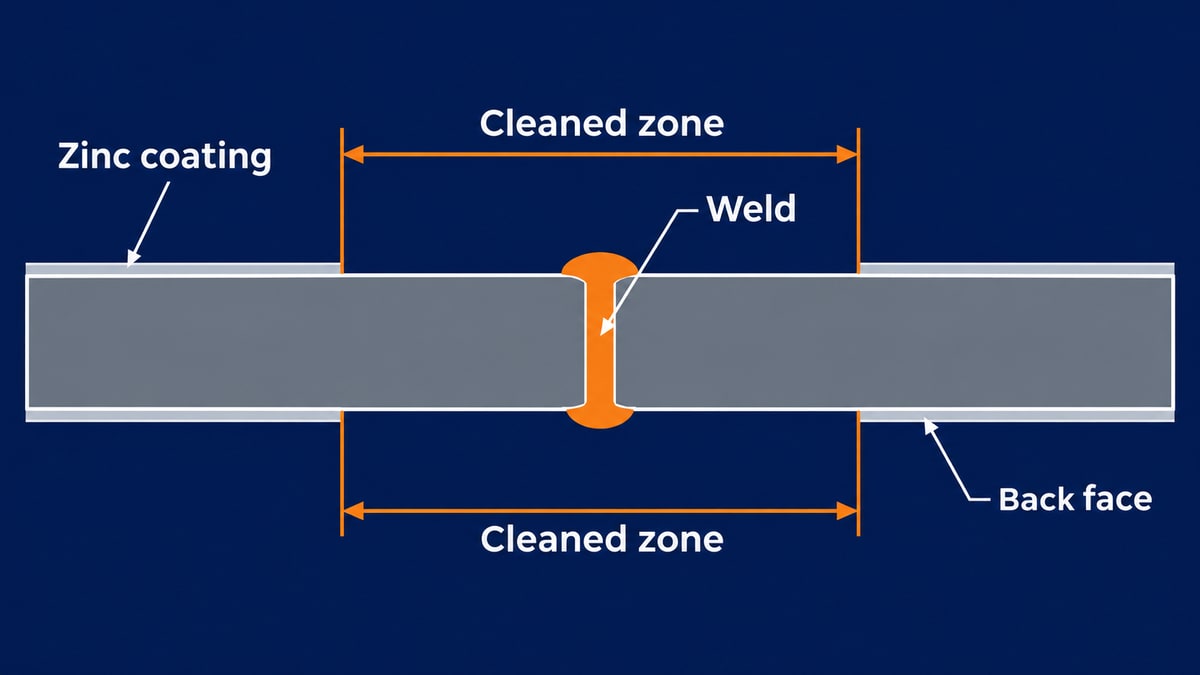
Figure 1: Remove the coating on both faces and well beyond the weld toe, not just where the arc will land.
Grinding, stripping and the disagreement between sources
Methods differ and so does the advice. The galvanizing industry describes mechanical grinding as the most effective removal method. A Canadian occupational health source states the opposite caution: do not grind coatings, because the dust may be toxic, and prefer stripping products or wet methods, with any residue removed before welding.
Both positions make sense in context. Zinc dust from grinding is still a respiratory hazard, so:
- Grind only with dust extraction at the tool or an extracted bench, plus suitable respiratory protection.
- Never grind painted or unidentified coatings dry without finding out what is in them.
- Use stripping products only as directed and clear residues, because leftover chemicals create their own fume.
- Clean away oil and dirt after removal, since contamination causes porosity regardless of the coating.
Joint design that helps
Where design allows, choose joints that keep zinc out of the root. Open-groove or butt joints with a proper gap let vapour escape. Tight lap joints are the worst case, since coating trapped between the plates vaporises explosively and can blow holes through the weld. Using fixtures or tack-welding sequences that preserve an escape path is worth the extra minute.
Choosing a Process for Galvanized Work
Any arc process can weld galvanized steel, but they behave differently around zinc.
MIG/MAG
Gas-shielded wire welding is the most common choice for sheet and light fabrication because it is fast and easy to extract. If you are new to the process, start with our primer on what is MIG/MAG welding. Expect more spatter and an unsteadier arc over uncleaned zinc, and use travel speeds that let the pool outgas rather than freezing zinc in place.
Stick welding
Stick is forgiving of surface contamination and wind, which makes it popular for site repairs on coated structures. If you are learning it, see what is stick welding. The trade-off is heavy fume at close range, so positioning and respiratory protection matter even more outdoors.
TIG
TIG gives the cleanest, most controlled weld but is unforgiving of contamination. Zinc on or near the joint will foul the tungsten and the pool, so careful coating removal is essential. Fume volume is lower than MIG or stick, but zinc oxide from the base metal is still present.
Brazing and cold joining
HSE guidance on welding fume controls puts elimination first: consider joining without welding, for example with bolts, rivets or adhesives, when the application permits. For some galvanized assemblies, mechanical fasteners avoid the problem entirely and keep the coating intact.
Control the Fume at the Source
Hazard control works in an order of preference. For welding fume, HSE's guidance prioritises eliminating or reducing welding, using lower-fume processes and consumables, cleaning and preparing the metal, mechanising where possible, and then engineering controls such as local exhaust ventilation (LEV).
Local exhaust ventilation
Capturing fume at the source is the most effective way to reduce exposure, according to HSE. Typical options include:
- On-torch extraction for MIG, which can be very effective when matched to the task.
- Extracted benches and booths for small and medium parts.
- Movable swing-arm hoods, which only work if the hood stays close to the arc and is repositioned as you move.
General dilution ventilation, such as a fan across the workshop, does not replace capture at the source and can push fume into a neighbour's breathing zone. When LEV discharges inside the building, the air must be filtered; when it discharges outside, it should be released where it can disperse.
Body position matters
Keep your head out of the plume. Welding with your face directly above the arc is the fastest way to inhale concentrated zinc oxide. Position the work so fume rises away from you, and when working outdoors stay upwind. Note that LEV cannot be relied upon outdoors, so respiratory protection becomes the main control there.
Respiratory protection
Where LEV alone does not achieve adequate control, or is not reasonably practicable, suitable respiratory protective equipment (RPE) is required. Powered or supplied-air respirators that combine breathing, eye and face protection are a common choice for regular welders. Selection depends on the task and the workplace's risk assessment, so rely on a competent person and the equipment's rating rather than a dust mask from the hardware shelf.
HSE does recognise that occasional welding is treated differently from full-time work, with RPE and good general ventilation as a minimum for short, infrequent jobs. That is a floor, not a recommendation to skip extraction when you can have it.
Confined spaces
Fume builds up quickly in enclosed spaces, and exposure and the controls needed increase greatly there. OSHA requires mechanical ventilation when there is little room per welder or low overhead height, and airline respirators or hose masks where ventilation cannot prevent hazardous exposure. Treat any tank, pit or enclosed section as a separate hazard and follow your confined-space procedures; use a dedicated confined-space procedure for that work.
Figure 2 summarises a safe working sequence for galvanized steel from identification to finishing.
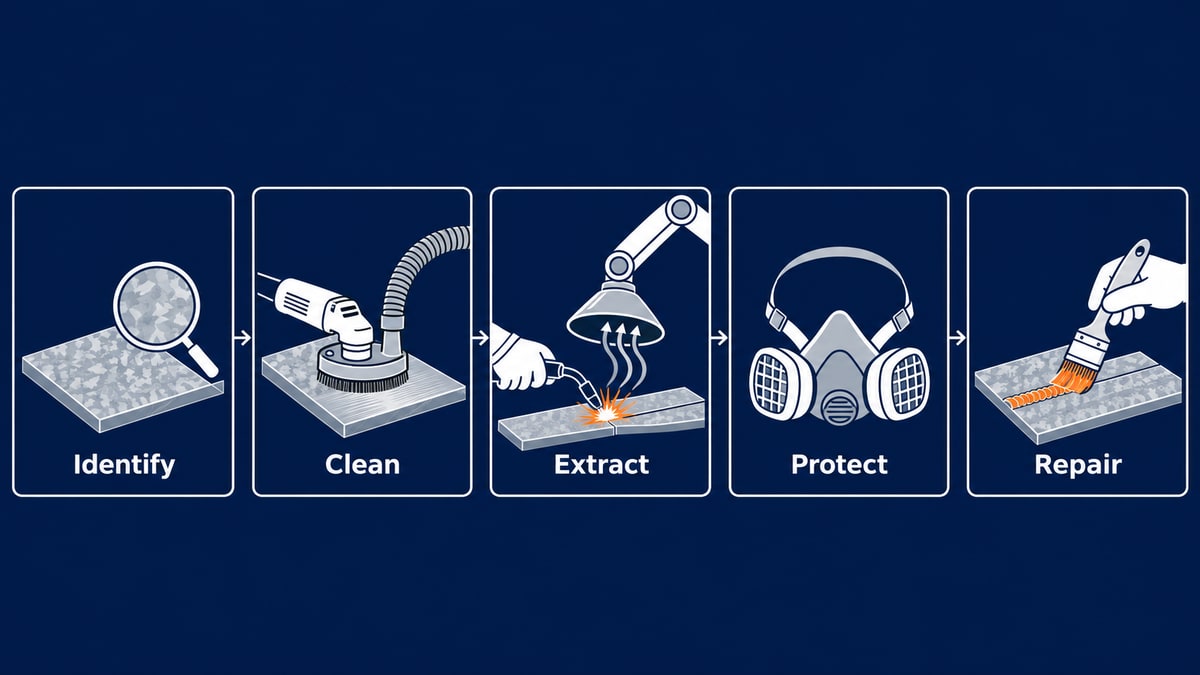
Figure 2: A simple sequence that puts preparation and extraction before the arc is struck.
Welding Technique and Weld Quality on Zinc-Coated Steel
Even with the zinc ground back, some coating may remain near the joint, and the pool will still behave differently. These habits help:
- Slow the travel slightly so gases can escape rather than freezing in the bead.
- Keep the arc length consistent, since zinc vapour tends to make the arc wander.
- Expect more spatter and clean it before coating repair.
- Use a joint gap rather than a tight fit to give vapour an escape route.
- Inspect for porosity and surface cracking, particularly in thin sheet.
Zinc can also contribute to cracking in some conditions when it contacts hot steel, which is another reason qualified procedures matter for structural or pressure work. Safety-critical joints should follow a written procedure and the applicable code instead of improvisation.
Restore the Corrosion Protection
Welding destroys the zinc at the joint and damages the coating next to it. The galvanizing industry points to ASTM A780 as the reference for repair, typically with zinc-rich paint or similar permitted products that can build a zinc-rich film to the required thickness. Because this advice comes from an interested trade body, confirm repair requirements against the project specification.
Practical steps:
- Remove slag and spatter and wire-brush or grind the weld to a clean, bright surface.
- Apply the repair material in the thickness the specification requires.
- Allow proper cure time before putting the part into service.
- Protect the repaired zone from moisture during cure.
Skipping repair is the usual reason welded galvanized assemblies start rusting at the joint within a season or two.
Common Mistakes to Avoid
- Welding straight through the coating because the part "looks clean".
- Ignoring the back side of lap joints and tube interiors.
- Relying on an open garage door or a pedestal fan as the only control.
- Grinding the zinc dry without extraction or respiratory protection.
- Welding unidentified plated parts, including hardware that may carry cadmium.
- Working through symptoms, assuming flu-like feelings are unrelated to the job.
- Forgetting bystanders, who breathe the same plume even if they are not welding.
A Practical Pre-Weld Checklist
- Coating identified; no cadmium, lead or unknown plating involved.
- Zinc removed from both faces, well beyond the weld zone, using extraction.
- Joint fit-up leaves an escape path for vapour.
- LEV positioned and tested; body kept out of the plume.
- RPE chosen for the task, fitted and in good condition.
- Others kept clear of the welding area.
- Repair coating and cure time planned.
For a broader foundation on protective equipment, fire prevention and electrical safety, read welding safety 101, then apply the galvanized-specific steps here on top of it.
Conclusion
Welding galvanized steel is safe enough when it is treated as a controlled task rather than an ordinary one. Identify the coating, take the zinc out of the weld zone with proper extraction, capture the fume at the source, keep your breathing zone out of the plume, and use suitable respiratory protection where capture is not enough. Afterwards, repair the coating so the joint does not become the weak point of the structure.
When sources disagree, as they do on grinding versus stripping, choose the method that you can control with extraction and protective equipment, and ask your safety adviser when in doubt. The work is routine; the exposure does not have to be.
Frequently asked questions
Can you weld galvanized steel?
Yes. Any common arc process can weld galvanized steel, but the zinc coating produces zinc oxide fume and can cause porosity and spatter. Good preparation, fume extraction and suitable respiratory protection make the work manageable.
Is welding galvanized steel dangerous?
It carries a real inhalation risk. The main acute effect is metal fume fever, and welding fume in general is a recognised long-term health concern. The risk is reduced considerably by removing coating from the weld zone, capturing fume at the source and using appropriate respiratory protection.
What is metal fume fever and how long does it last?
Metal fume fever is a flu-like illness caused by inhaling metal oxide fume, most often zinc oxide. Symptoms include fever, chills, cough, nausea and aches, usually appearing hours after exposure and settling within a day or two. Seek medical advice if symptoms are severe.
Do you have to remove galvanizing before welding?
Safety and welding guidance recommends removing the coating from the weld area, on both faces, for a margin on each side of the joint. It reduces fume and improves weld quality. Some structural codes and procedures set specific requirements, so follow the one that applies.
How far back should you grind the zinc?
The galvanizing industry suggests roughly 1 to 4 inches (25 to 100 mm) on each side of the weld, on both sides of the workpiece. Use the larger margin for thick material, high heat input or full-penetration joints.
Is it safe to grind galvanized steel?
Grinding creates zinc-containing dust, so it needs dust extraction and suitable respiratory protection. Some occupational health sources advise against dry grinding of coatings and prefer stripping or wet methods. Choose a method you can control and avoid grinding painted or unidentified coatings.
What respirator should I use for galvanized steel?
There is no single answer, because it depends on the task, duration and ventilation. Powered or supplied-air respirators are common for regular welding, while occasional short jobs may rely on suitable RPE plus good ventilation. Base the choice on a risk assessment and the equipment's rating.
Can I weld galvanized steel outdoors?
Outdoor work disperses fume but does not remove the risk, and LEV is hard to rely on in wind. Stay upwind, keep your head out of the plume and use suitable respiratory protection. Keep bystanders away.
What is the best welding process for galvanized steel?
There is no universally best process. MIG is common and easy to extract, stick tolerates contamination for site repairs, and TIG gives the cleanest weld but needs very thorough coating removal. Choose the one that suits the thickness, position and your extraction setup.
How do you protect the weld area from rust afterwards?
Clean the weld, remove slag and spatter, then apply a zinc-rich repair coating or other approved product to the thickness required by the specification. Follow the repair standard cited in your project documents.
References
- Shipbuilding and Ship Repair - General Hazard: Respiratory Irritation and Systemic Poisoning - OSHA, accessed 2026-11-19. Zinc oxide as the usual cause of metal fume fever; cadmium hazard; ventilation requirements.
- Welding, Cutting, and Brazing - Hazards and Solutions - OSHA, accessed 2026-11-19. Overview of welding health hazards and linked control resources.
- Controlling the risks from welding - Health and Safety Executive (UK), accessed 2026-11-19. Control hierarchy, LEV and RPE guidance.
- Welding - Fumes And Gases - Canadian Centre for Occupational Health and Safety, accessed 2026-11-19. Coating hazards and removal advice.
- Metal Fume Fever - StatPearls, NCBI Bookshelf, accessed 2026-11-19. Clinical overview of metal fume fever in welding (confirmed in search results; page itself blocked automated access).
- Metal fume fever--a review - PubMed, accessed 2026-11-19. Review of occurrence and course of metal fume fever (confirmed in search results).
- Can You Weld Galvanized Steel? - American Galvanizers Association, accessed 2026-11-19. Supplier-side industry source, used only for coating removal margins and repair practice.