
Best MIG Welder for Beginners
How to choose a beginner MIG welder: duty cycle, transformer vs inverter, input power, output range and the features that matter for learning.

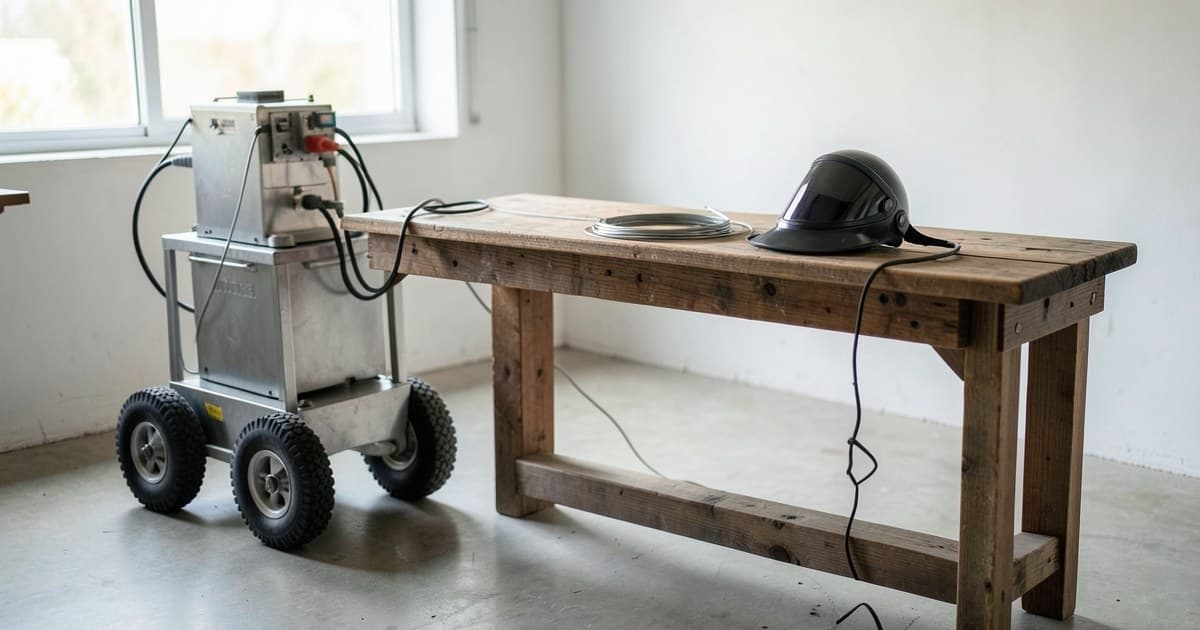
If you are looking for the best MIG welder for beginners, the honest answer is that there is no single model that suits everyone. The right machine depends on the power you have at home, the metal you plan to weld and how often you will use it. A welder that is ideal for a hobbyist fixing a trailer may be the wrong choice for someone building a workshop bench.
This guide focuses on what matters when you are learning. It explains how a MIG machine works, what the important ratings mean, and which features actually help a new welder improve. It does not name specific brands, because prices, models and availability change quickly and a model that suits one buyer may not suit another.
Why MIG Is a Good First Process
MIG, or gas metal arc welding (GMAW), feeds a continuous wire through the torch while a shielding gas protects the weld pool. Because the wire feeds automatically, the process is classed as semi-automatic. That makes it easier to learn than stick or TIG welding, which both depend more on the welder's own hand control and timing.
The process also produces weld metal quickly, which means beginners can complete a joint and see the result sooner. For a deeper look at the process itself, see what is MIGMAG welding before you choose equipment.
Self-regulation is the other reason MIG suits new welders. Most machines use a constant-voltage power supply, which keeps the arc length steady as long as the settings are right. The arc stays more forgiving when your hand moves a little, which is exactly the situation a beginner creates most often.
What a MIG Welding Setup Contains
A MIG setup has four main parts: the power supply, the wire feed unit, the welding gun with its cable, and a source of shielding gas. The power supply produces the current, the feed unit pushes wire through the gun, and the gas keeps air away from the molten metal.
Knowing these parts helps you read the specifications on any machine. A feed unit that moves wire smoothly and a gun with a comfortable handle matter just as much as the power rating on the box. For a broader overview of how the machines fit together, the welding equipment guide covers the other processes too.
Some machines are built to handle higher currents for longer, and those usually need additional cooling for the gun. A beginner rarely needs that capacity on day one, but it is worth knowing that cooling and duty cycle are linked.
Transformer or Inverter
Two broad designs dominate the market. A transformer machine steps down the mains voltage and increases the current, and it has been around for a long time. Transformer welders are known for reliability and often for higher output at a lower price, but they tend to be heavier and less efficient.
An inverter machine uses electronics to convert mains power into welding power. Without a heavy iron core and copper windings, inverters are smaller, lighter and more efficient, and most multi-process machines on the market are inverters. They also give finer control, with digital displays and adjustments to a tenth of a volt for wire-feed processes.
For a beginner who will move the machine around a home or a small garage, an inverter is usually the more practical choice. The finer controls also make it easier to find good settings, which shortens the time spent guessing. A transformer can still be a sensible choice if you need maximum output for the money and do not mind the extra weight.
Duty Cycle: The Number That Gets Misread
Duty cycle is the share of time a welder can operate at a given output within a set period, usually ten minutes. For example, one manufacturer rates a multi-process machine at 200 A at 30 per cent duty cycle. That means it can weld at 200 A for three minutes in every ten, then needs to cool.
The rating falls as the output rises. The same machine in that example is rated at 60 per cent at 145 A, and at 100 per cent at 110 A. A duty cycle figure is therefore only meaningful when you also know the current it was measured at.
Test conditions change the result as well. The ambient temperature, whether the machine was cold or already warm, and the length of the test period all affect the figure. The European test standard EN 60974-1 is widely used because it is demanding, and not every manufacturer tests to the same standard, so comparing numbers between brands needs care.
For a beginner this matters less than people think. Most early practice happens at moderate current with short beads and frequent pauses. Still, a machine with a higher rating at your typical settings will feel more relaxed to use, and it will not cut out in the middle of a seam.
Input Power and Where You Will Weld
Before comparing models, check the power supply in the place you will weld. Home outlets vary by country and by circuit, and many welders need a particular voltage and a suitable breaker. A machine that runs on a standard outlet is convenient for a garage, but it may limit the thickness of metal you can weld.
Higher-voltage supplies generally allow more output, which is why many workshops use them for heavier work. If your only outlet is on a shared circuit, check the amperage the machine draws at its maximum setting, and make sure the circuit can carry it safely.
Ask an electrician if you are not sure. Do not run a welder from an extension cable or a socket that is not rated for the load. Electrical faults are one of the more serious risks in welding, and they are easy to prevent with the right supply.
Output Range and Material Thickness
The output range tells you what metal the machine can handle. Thin sheet needs low current, while thicker plate needs more. A machine with a wide range gives you room to learn on scrap and then move up to real work without buying a second welder.
Choose the range for the work you expect to do in the next year, not for a rare heavy job. Many beginners start on sheet and small brackets. If you later need to weld thick plate, a larger machine or a second process may be the better route.
The wire size also changes what the machine can do. Smaller wire suits thin material and makes the arc easier to control, while larger wire carries more current and suits thicker sections. Check that the feed unit supports the wire diameter you plan to use.
Features That Actually Help Learning
Adjustable voltage and wire speed are the two settings that matter most. They let you set the arc length and the amount of heat independently, and they make it possible to find a good setting for each thickness. A machine that offers only preset modes can work, but you learn less from it.
A clear display helps you read the settings you chose and repeat them. Digital readouts show voltage and wire speed in a way that makes it easy to write down a good setting and reuse it next time. This matters more than extra modes you will not use.
Gas or flux-cored capability is worth considering. Gas MIG gives the cleanest bead on most steels, but it needs a cylinder and regulator. Flux-cored wire does not need external gas, which suits outdoor work, though it leaves slag and produces more spatter. Decide which one you will use most before you buy.
A Buying Checklist for Beginners
Use this list to compare machines on paper before you spend money:
- Power: Confirm the supply in your workshop matches the machine.
- Process: Decide between gas MIG and flux-cored, or buy a machine that does both.
- Output: Check that the range covers the thickness you will weld for the next year.
- Duty cycle: Compare the rating at the current you expect to use, not only the maximum.
- Controls: Look for adjustable voltage and wire speed with a readable display.
- Weight: Be realistic about where the machine will live and how often you will move it.
- Support: Check that spare parts and consumables are easy to find where you live.
If you are also choosing between processes, the best TIG welder for beginners guide explains when TIG is the better choice, and it is worth reading before you commit to MIG.
Consumables You Will Need Early On
A new MIG welder runs on a small set of consumables. Contact tips wear out, nozzles collect spatter, and liners clog if the wire is not kept clean. Budget for a spare contact tip and nozzle from the start, because a worn tip makes the arc unstable.
Buying good consumables is often more useful than buying a more expensive machine. The MIG welding gun consumables guide covers what to keep in stock and how to replace parts before they cause problems.
Wire quality matters too. Clean, consistent wire feeds smoothly and produces a steadier arc, so avoid wire that has been left exposed to damp air or is kinked on the spool.
Common Mistakes When Buying
Many beginners buy the most powerful machine they can afford and then struggle to use the lowest settings. A machine with a very high maximum output still needs to run at low settings for thin metal, so check the minimum as well.
Another mistake is ignoring the duty cycle until the machine cuts out in the middle of a job. Choose a rating that fits your typical work, and plan short beads and rest periods when you practise.
Finally, some people buy a machine without checking the gun and cable. A torch that is hard to hold or a cable that is too short will make practice more tiring, and it is worth testing the whole setup before you buy.
Safety Basics Before You Strike an Arc
Good equipment does not remove the risks of welding. The arc produces intense ultraviolet light, so wear a helmet with the correct shade and cover exposed skin. Sparks and hot spatter can start fires, so clear flammable material from the area and keep a fire extinguisher nearby.
Fume is the other concern. Ventilate the work area, keep your head out of the plume, and take extra care with coated, painted or galvanised metal, which can release harmful fumes. Follow the safety data for any consumables and coatings you use.
Work on a dry surface and keep leads and cables off wet ground. Turn the machine off before changing wire, contact tips or polarity settings, and inspect cables for damage before each session.
Putting It Together
The best MIG welder for a beginner is the one that matches your power supply, your metal thickness and your budget, and that gives you adjustable settings you can read. Start by deciding what you will weld in the next year, then check the power, the output range and the duty cycle at your typical current.
Buy the process you will use most, and spend money on consumables and safety equipment before adding extra features. Practise on scrap of the same material and thickness as your real work, because the settings that work on one metal will not always transfer to another.
With a sensible machine and steady practice, MIG is one of the quickest processes to become productive with. Take your time with the settings, keep notes on what worked, and you will progress faster than you expect.
Frequently asked questions
Is MIG welding easier to learn than stick welding?
For most people, yes. The wire feeds automatically, so the welder spends less effort on feeding filler and holding a fixed arc length. Stick and TIG both take longer to control well.
Should a beginner buy an inverter or a transformer welder?
An inverter is usually the better choice for a beginner who needs portability and finer control. A transformer can offer strong output and reliability at a lower price, but it tends to be heavier.
What does duty cycle mean on a MIG welder?
It is the percentage of a set period, usually ten minutes, that the machine can weld at a given output before it must cool. A rating is only meaningful with the current it was measured at.
Do I need a gas MIG or a flux-cored machine?
Gas MIG gives a cleaner bead on most steels and suits indoor work, but it needs a cylinder. Flux-cored wire does not need external gas and suits outdoor work, but it produces more slag and spatter.
How thick a metal can a beginner MIG welder handle?
It depends on the machine's output range and the wire size. Thin sheet needs low current, while thicker plate needs more. Choose a machine whose range covers the work you expect to do in the next year.
Why does the machine cut out while I am welding?
Most welders have thermal overload protection. If the machine is worked above its duty cycle, or in a hot environment, it shuts down to cool and restarts when it is safe.
What settings matter most when I start?
Adjustable voltage and wire speed matter most, because together they set arc length and heat. Start at a low setting on scrap, increase in small steps, and write down the combinations that work.
Do I need to wear a helmet for practice welds?
Yes. The arc produces intense ultraviolet light that can injure the eyes and skin even during short practice sessions, so use a helmet with the correct shade and cover exposed skin.
References
- Gas Metal Arc Welding - Advanced High Strength Steel (AHSS) Guidelines, accessed 2026-11-16.
- David Ridge, 5.2 Welding Power Sources - Introduction to Welding, OpenWA, accessed 2026-11-16.
- Weldclass, What is Duty Cycle & How is it Calculated - Weldclass (manufacturer), accessed 2026-11-16. Manufacturer source, used only to explain how duty cycle is tested.