
Best MIG Welding Guns and Consumables Guide
A practical MIG welding gun consumables guide: how contact tips, nozzles, diffusers and liners work, how to match them to your job, and when to replace them.

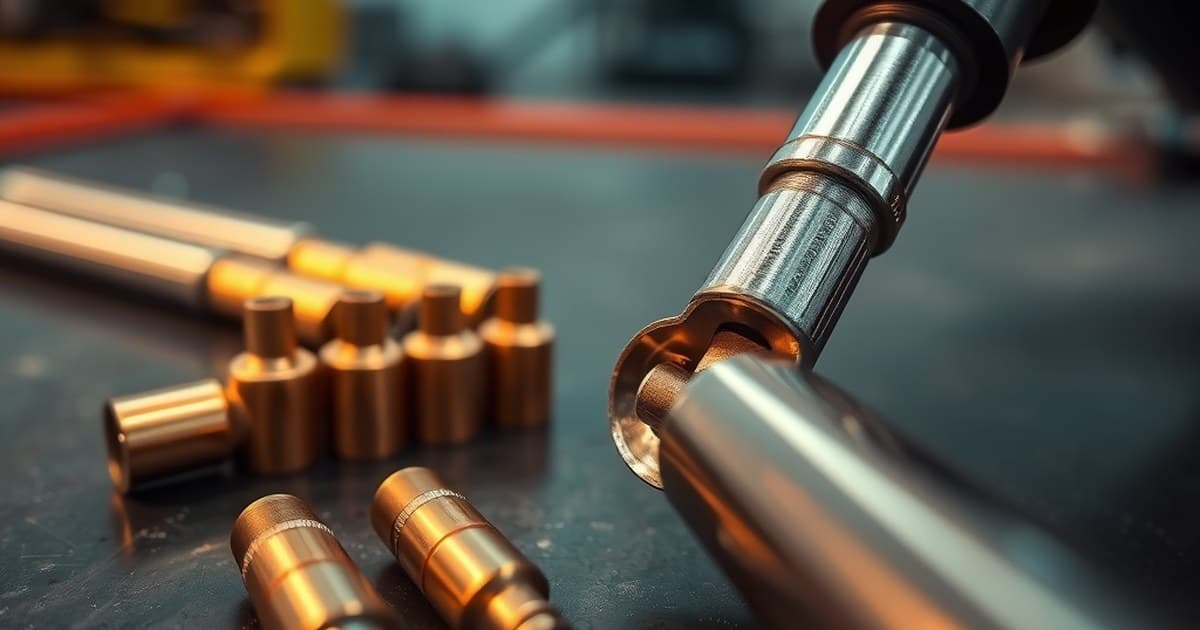
Most MIG problems that people blame on the power source, the wire or their own technique actually start inside the gun. A worn contact tip, a dirty liner or a nozzle packed with spatter can ruin an otherwise good setup. This MIG welding gun consumables guide explains what each wearing part does, how to choose the right one for your work, and how to tell when it is time to change it.
If you are new to the process itself, start with the basics of MIG welding and then come back here. The gun is the part of the machine you touch for every weld, so it is also the part where small decisions pay off fastest. For the bigger picture of how the gun fits with the power source, wire feeder and gas supply, see the welding equipment guide.
The goal here is not to crown one brand. Gun and consumable systems are mostly proprietary, so "best" depends on your amperage, wire, duty cycle and the parts your gun is built around. What you can do is learn the criteria that separate a good choice from a poor one.
What counts as a MIG gun consumable?
A MIG gun is an assembly that carries three things to the arc at once: welding current, wire and shielding gas. In a typical gas metal arc welding (GMAW) gun, the key parts are the trigger switch, contact tip, power cable, gas nozzle, electrode conduit and liner, and gas hose. Some guns also have a water hose built in for cooling at high heat input.
Not every part wears at the same speed. The ones that sit near the arc, or that rub against the moving wire, are treated as consumables and replaced on a routine basis.
| Part | What it does | Wear mechanism | Typical replacement pattern |
|---|---|---|---|
| Contact tip | Passes current into the wire and guides it | Bore wear, spatter, arcing, burn-back | Most frequent, often several times per shift in heavy use |
| Gas nozzle | Delivers a smooth gas blanket around the arc | Spatter build-up, heat damage, dents | When cleaning no longer restores gas flow |
| Diffuser (tip holder) | Holds the tip and spreads gas | Thread wear, clogged gas ports, heat damage | Every few tip changes if damaged |
| Liner | Guides wire from feeder to tip | Wire debris, kinks, abrasion | Periodically, or when feeding becomes erratic |
| Insulator and neck parts | Isolate the nozzle, aim the wire | Heat, impact, bending | When damaged or loose |
| Drive rolls | Push wire through the system | Groove wear, wrong groove type | When slippage or wire deformation appears |
The replacement pattern column is deliberately loose. How fast parts wear depends on current, duty cycle, wire type, cleanliness of the base metal and how the gun is handled.
The contact tip: the hardest-working part of the gun
The contact tip is normally made of copper and is sometimes chemically treated to reduce spatter. It connects to the power source through the power cable and transfers electrical energy to the wire while directing it to the weld. It has to be firmly secured and properly sized, because it must let the wire pass while still keeping good electrical contact.
That last requirement is the whole trick. If the bore is too tight, the wire sticks and feeds poorly. If the bore is too loose or worn oval, the electrical contact becomes unstable and the arc starts to wander.
Matching tip bore to wire diameter
Contact tips are sold for specific wire diameters, and the correct size is printed on the tip or listed in the gun manufacturer's chart. Use the size the manufacturer specifies for your wire. Some guns call for a slightly different bore for flux-cored wire or aluminium wire than for solid steel wire, so check the chart instead of assuming that one bore suits all wires of the same nominal diameter.
A few practical rules help:
- Never force a larger-diameter wire through a small tip.
- Do not run a worn tip just because the wire still passes through it.
- Keep a separate labelled stock for each wire diameter you use, so mix-ups are caught at the bench and not at the arc.
Tip materials and coatings
Standard copper tips are the common choice for general fabrication. Harder or more heat-resistant copper alloys exist for higher currents and for automated work, where a tip sits in a hot environment for long periods. These can last longer but usually cost more per piece.
Treat claims about lifespan with caution. A longer-lasting tip only saves money if the savings in changeover time and rework exceed its price, and that depends on your own process. A reasonable approach is to track how many tips you use over a couple of weeks of normal work with each option, then compare.
Recess, flush and stick-out
Tip position relative to the nozzle affects gas coverage and spatter. The distance between the contact tip and the work, known as stick-out, matters just as much. Excessive stick-out may cause the wire to melt too far from the weld, giving a sputtering arc, shallow penetration and poor deposition. It can also stop the shielding gas from covering the fusion zone properly, leading to contamination and porosity.
Too little stick-out causes the opposite problem. Spatter builds up faster inside the nozzle, and in extreme cases the wire can burn back into the tip. Burn-back may jam the wire in the tip and stop it moving, which can end in "bird-nesting", a tangle of wire at the feed mechanism.
Takeaway: when you change the tip, check how far it sits from the nozzle face, and hold a consistent stick-out while welding. Both habits protect the tip and the weld.
The gas nozzle: shape, size and spatter control
The nozzle directs shielding gas evenly into the weld zone. Inconsistent flow may not protect the weld area adequately. Larger nozzles deliver greater gas flow, which is useful for high-current work that produces a larger molten pool.
Common nozzle choices differ in three ways.
Bore size
A larger bore gives a wider gas blanket and tolerates higher current. A smaller bore improves access in tight joints, such as inside corners, but limits gas coverage at high amperage. Choose the largest nozzle that still gives you a clear view and access to the joint.
Shape
Straight (cylindrical) nozzles are the general-purpose choice. Tapered nozzles give better access to narrow grooves and fillets. Bottle-neck shapes concentrate gas and are often used where a smaller opening is needed at high current. Which shape fits depends on the joint, so a small assortment is more useful than a single "best" nozzle.
Spatter management
Over time, welding builds spatter inside the nozzle. If enough accumulates, it affects gas dispersal and can cause unsound welds. The welder must therefore clean the nozzle and tip periodically. Anti-spatter compound, sold as a paste often called "tip dip" or as an aerosol spray, can slow the rate of build-up.
Use these products sparingly and follow the product instructions. Overuse can add contamination of its own, and some compounds are not suitable for every application, so check compatibility before using them on critical work.
The diffuser or tip holder
The diffuser threads onto the gooseneck, holds the contact tip and spreads gas around it before the gas exits through the nozzle. It is easy to overlook because it rarely fails dramatically. When it does, the symptoms look like gas problems: porosity, soot, or a tip that works loose and overheats.
Check these points when you service the gun:
- The gas ports are open and free from spatter.
- The tip thread seats fully, with no cross-threading or damage.
- The diffuser is tight on the neck, with no gaps where gas could escape.
- There are no signs of overheating, such as discolouration or distortion.
A loose tip or diffuser is a common cause of arc instability, because a poor electrical joint creates resistance and heat. Tighten by hand and a quick nip with the correct tool, not with pliers that can damage the threads.
The liner: the quiet cause of feeding trouble
On the way to the contact tip, the wire is protected and guided by the electrode conduit and liner. They prevent the wire from buckling and help keep the feed uninterrupted. When the liner is partly blocked or damaged, the wire feeds unevenly and the arc stutters, even though the tip and drive rolls look fine.
Liner types
Steel liners (coiled spring-steel) are the usual choice for steel and stainless wires. Plastic or low-friction liners are generally preferred for softer wires such as aluminium, which can shave and clog on a steel liner. The right liner also depends on wire diameter, so use the size matched to your wire, and follow the gun manufacturer's guidance for each wire type.
Signs a liner needs attention
- The wire feeds in jerks, or the feeder motor sounds strained.
- Wire shavings or dust collect at the drive rolls or the tip.
- Pushing the wire by hand through the gun feels rough compared to a new liner.
- The cable has been kinked or sharply bent in use.
Cutting a new liner to the correct length matters. Too long and the wire can catch at the gun end. Too short and it leaves a gap where the wire is unsupported. Follow the manufacturer's trimming instructions, and deburr the cut end so it does not shave the wire.
Drive rolls, the gooseneck and other parts that affect feeding
The wire feed unit supplies the wire to the work, driving it through the conduit to the contact tip. Most machines feed at a constant rate. In semiautomatic GMAW, feed rates typically range from about 2 to 10 metres per minute (75 to 400 inches per minute), and the system as a whole has to handle that range consistently.
The drive rolls are not strictly gun parts, but they are part of the same feeding chain, so they belong in any consumables routine. Match the groove to the wire: V-grooves for solid hard wire, knurled grooves for flux-cored wire, and U-grooves for soft wire. Wrong groove types crush, shave or slip on the wire, creating debris that ends up in the liner.
The gooseneck (neck) also deserves a look. Bent or heat-damaged necks can misalign the wire as it enters the tip, causing uneven wear. Replace damaged necks as they are not worth repairing.
Choosing a MIG gun: criteria that matter
Because this is a MIG welding gun consumables guide, the gun choice matters mostly because it decides which consumables you will be buying for years. Consider these criteria in order.
1. Amperage and duty cycle
Pick a gun rated for your normal working current, with some margin. Running a light-duty gun near its limit makes tips, diffusers and cables overheat and wear faster. Higher-current or continuous work usually calls for a gun built for that duty, and sometimes a water-cooled one.
2. Cooling method
Air-cooled guns are lighter, simpler and common in light fabrication and workshop use. Water-cooled guns carry more current for longer without overheating, at the cost of more hardware, more maintenance and the need to manage coolant. Match the cooling to the duty, not to what looks more professional.
3. Wire type and diameter
Check that the gun and its consumables support your wire material and diameter range: solid steel, stainless, aluminium or flux-cored. Aluminium in particular tends to call for specific liners and tips.
4. Cable length and flexibility
Longer cables add reach but also add friction, which makes feeding harder, especially for soft wires. Use the shortest cable that gives practical access. Avoid tight loops and sharp bends in the cable during use.
5. Consumable availability and cost
Look at the consumable system, not only the gun body. Ask:
- Are tips, nozzles and diffusers easy to buy locally?
- Are they sold in sizes for all your wires?
- Are parts interchangeable between the guns in your shop?
- Is the pattern one that other suppliers also make to a quality standard?
Standardising on one system across a shop often saves more over time than chasing the cheapest part.
6. Ergonomics
Handle shape, neck angle and weight affect fatigue and, through fatigue, consistency. Try the gun in a realistic position before committing, if you can.
Best practice: a simple consumables routine
A routine beats a reaction. Waiting for a failure usually means rework, lost time, and sometimes a damaged gun.
Daily or per shift
- Inspect the nozzle and remove spatter with the correct tool.
- Check that the tip is tight and the bore is round.
- Confirm the wire feeds smoothly and the gas flows when the trigger is pressed.
On every spool change
- Cut the wire end clean and straight before threading it.
- Blow out the liner gently with dry, clean air only if the manufacturer's guidance allows it, and while the wire is removed.
- Check the drive rolls for wear and debris.
Periodically
- Replace the liner when feeding becomes inconsistent or after the interval you have established.
- Replace damaged insulators, diffusers and necks.
- Check cables, connections and the gas hose for leaks.
Keep a spares kit by every station that contains tips for each wire size, a spare nozzle, a diffuser and the tools to fit them. A kit costs little compared with the time lost searching for parts mid-job.
Common mistakes with MIG gun consumables
Using the wrong tip size. Wire diameter and tip bore must match. This is the most common avoidable cause of unstable arcs.
Running tips until they fail. A worn tip can look acceptable, yet give inconsistent current transfer. Replace on symptoms, not only on obvious damage.
Ignoring spatter in the nozzle. Build-up changes gas flow and can contribute to porosity. A quick clean is cheap insurance.
Using a steel liner for aluminium. Soft wire can shave and clog, causing feeding trouble and burn-back.
Over-tightening or cross-threading. Damaged threads create poor electrical contact and heat.
Overusing anti-spatter compound. More is not better, and some residue can cause its own defects.
Blaming the gas first. Porosity is often caused by a clogged nozzle, loose diffuser or draught, so check the gun and the environment before changing the gas.
Troubleshooting: symptoms and likely causes
| Symptom | Likely gun-side cause | What to check |
|---|---|---|
| Wandering or unstable arc | Worn or loose contact tip | Replace the tip, tighten the diffuser |
| Wire burns back to the tip | Insufficient stick-out, worn tip, feed interruption | Check stick-out, tip condition and feeding |
| Erratic wire feed | Dirty or damaged liner, wrong drive rolls | Check liner, rolls and cable bends |
| Porosity | Spatter in nozzle, loose diffuser, gas leak | Clean the nozzle, check seals and hoses |
| Excess spatter | Worn tip, poor stick-out | Replace tip, correct technique and settings |
| Bird-nesting | Jam at the tip or liner, wrong tension | Inspect tip and liner, adjust drive rolls |
These are starting points, not a full diagnosis. If the cause is not in the gun, move on to the settings and the base metal.
Shielding gas and the gun
The gas nozzle and diffuser exist to deliver the shielding gas. Pure inert gases such as argon and helium are used only for non-ferrous welding. With steel, argon does not give adequate penetration, and helium gives an erratic arc and more spatter. Gas mixtures and carbon dioxide are common for steel work.
The gas choice also affects consumable life indirectly. Higher carbon dioxide content generally gives more spatter than argon-rich mixtures in many setups, which can mean more nozzle cleaning. This is a tendency, not a rule, because settings and technique play a large role.
Improper gas choice can lead to porous, weak welds or excess spatter, and used carelessly, shielding gases can displace oxygen and cause hypoxia. Store and handle cylinders in well-ventilated areas.
Safety around MIG guns and consumables
Servicing a gun is simple, but a few precautions are worth stating.
- Disconnect power first. Switch off and isolate the machine before changing consumables, and let the gun cool, since tips and nozzles can be hot enough to burn.
- Wear gloves when changing parts. Sharp wire ends and hot components cause minor injuries.
- Control fumes. Welding fumes contain particulate matter and gases that can affect health, particularly in confined spaces. Reported hazards include metal fume fever and lung cancer, and the risk varies with the metals used and the surface being welded. Regulations call for local exhaust or general ventilation to keep toxic fumes below the permitted limits. The International Agency for Research on Cancer has carried out a dedicated carcinogenicity evaluation of welding and welding fumes, which is a good reason to treat fume control seriously.
- Manage fire risk. Spatter can start fires, so keep flammable material away from the work area and follow your site's hot-work rules.
- Check the regulations that apply to you. Requirements differ by country and employer, so confirm them locally.
This information is general and does not replace your employer's procedures, the gun manufacturer's instructions or the guidance of a qualified safety professional.
How to build a sensible consumables stock
Rather than stocking everything, start with what you actually use. A small shop with one steel wire size might need only tips, a nozzle or two and a diffuser. A shop with several wires and guns needs a more structured plan.
- List every gun, its model and the wires it runs.
- For each, record the tip size, nozzle type, diffuser and liner part numbers.
- Hold enough tips for a week or two of work, based on your actual usage.
- Keep spare liners, necks and insulators for the guns you cannot afford to have down.
- Review the list when you add a new wire type or gun.
This avoids the two common failures: running out of tips mid-job, and buying large quantities of parts that do not fit anything you own.
Conclusion
Good results from MIG welding rest on small parts doing their jobs. The contact tip carries current and guides the wire, the nozzle and diffuser deliver gas, and the liner keeps the wire moving. When you match each to your wire and amperage, keep stick-out consistent, clean spatter before it builds up and replace parts on symptoms, most feeding and gas problems never appear.
When choosing a gun, think about the whole consumable system: current rating, cooling, wire support, local parts supply and comfort. Then set up a simple routine and a spares kit, and the gun will stop being a source of surprises. The best MIG welding gun consumables guide is, in the end, the one you apply at your own bench, so use this one as a checklist and adjust it to your equipment manual.
Frequently asked questions
How often should I change a MIG contact tip?
There is no fixed interval. Change it when the bore wears oval, the arc becomes unstable, the wire burns back, or spatter and damage affect the wire path. In heavy use that can mean several times a shift, while light use can last much longer.
Can I use the same contact tip for different wire sizes?
No. Each tip is made for a specific wire diameter, and the right size is shown on the tip or in the gun manufacturer's chart. Using the wrong size causes poor feeding or poor electrical contact.
What is the difference between a diffuser and a contact tip?
The contact tip passes current to the wire and guides it. The diffuser, also called a tip holder, threads onto the gooseneck, holds the tip and spreads shielding gas around it before it reaches the nozzle.
Do I need a different liner for aluminium wire?
Usually yes. Soft aluminium wire tends to shave and clog a steel liner, so plastic or low-friction liners are generally preferred. Follow the gun manufacturer's recommendation for your wire and diameter.
Why does my wire keep burning back into the tip?
Common causes include too little stick-out, a worn tip, interrupted wire feeding or incorrect settings. Check stick-out first, then inspect the tip, liner and drive rolls.
How do I know when to replace the liner?
Replace it when feeding becomes jerky, wire debris collects at the drive rolls or tip, or the wire pushes through roughly by hand. A kinked or damaged cable is another reason to replace it.
Does a bigger nozzle always give better gas coverage?
A larger nozzle delivers more gas and suits high-current work, but it can limit access in tight joints. Pick the largest nozzle that still gives you access and a clear view of the joint.
Is anti-spatter spray or gel necessary?
It is optional. These compounds can slow spatter build-up on the nozzle and tip, but overuse can add residue and they may not suit every application. Use them sparingly and follow the product instructions.
Are water-cooled guns worth it?
For high-current or continuous work, they can carry more current for longer without overheating. For light fabrication and occasional use, air-cooled guns are simpler and usually adequate.
Can bad consumables cause porosity?
Yes. Spatter in the nozzle, a loose diffuser or a gas leak can disturb the gas blanket and let air in. Draughts and an excessive stick-out can have the same effect, so check the whole setup.
Should I buy original or compatible consumables?
Either can work if the parts fit properly and are made to a consistent quality. Poor-fitting parts cause loose connections and heat, so choose on fit and consistency, and test a small batch before stocking up.
References
- Wikipedia contributors, Gas metal arc welding - Wikipedia, accessed 2026-10-31.
- Wikipedia contributors, Shielding gas - Wikipedia, accessed 2026-10-31.
- Evaluation of welding, welding fumes, and some related chemicals - International Agency for Research on Cancer, 2017. Summary of the carcinogenicity evaluation of welding.
- Hospitals eTool: Facilities Management - Welding Fumes - Occupational Safety and Health Administration, accessed 2026-10-31. Health effects of welding fumes and ventilation guidance.
- 29 CFR 1910.252 - General requirements - Occupational Safety and Health Administration, accessed 2026-10-31. Fire prevention and ventilation requirements for welding.