
TIG vs MIG Welding: Which Should You Choose?
TIG vs MIG welding compared on precision, speed, cost, skill, materials and safety, with a practical framework for choosing the right process for your job.

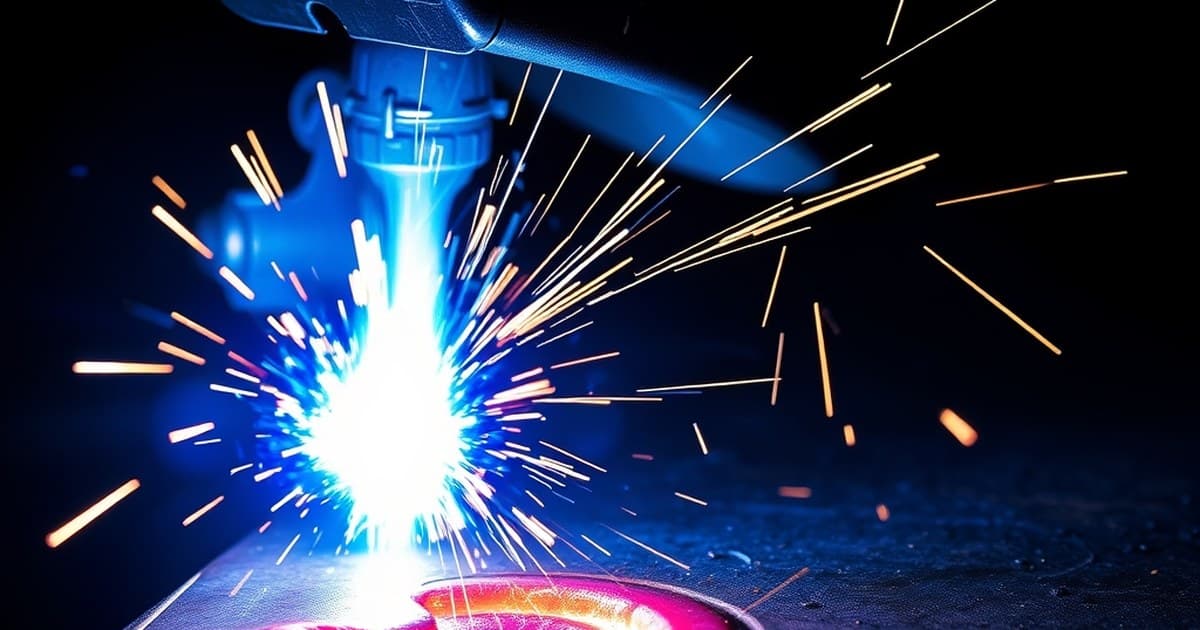
The honest answer to TIG vs MIG welding is that neither process is better in the abstract. They are tools with different strengths: TIG gives you fine control and very clean welds at the cost of speed, while MIG gives you productivity and an easier learning curve at the cost of some precision. The right pick depends on the material, the thickness, the joint, the quality requirements and the person holding the torch.
This guide compares the two processes side by side, explains why they behave so differently at the arc, and gives you a practical way to decide. If you are new to either process, the primer on What Is TIG Welding and the overview of What Is MIG Welding cover the fundamentals in more depth.
How the Two Processes Actually Differ
Both processes are arc welding methods that shield the molten pool with a gas. The difference that drives almost everything else is what happens to the electrode.
In TIG (gas tungsten arc welding, GTAW), the arc burns between a non-consumable tungsten electrode and the workpiece. The tungsten does not melt into the joint. If filler metal is needed, the welder adds it separately, usually by hand as a rod, and the process is shielded by an inert gas such as argon or helium.
In MIG/MAG (gas metal arc welding, GMAW), the electrode is a continuously fed wire that becomes the filler metal. The arc melts the wire and the base metal together, and a gun feeds the wire automatically while the welder controls travel and position. MIG uses an inert gas, while MAG uses an active gas or gas mixture, and the term GMAW covers both.
That single design difference creates a chain of consequences:
- TIG separates heat from filler. You control amperage (often with a foot pedal or torch control) and filler addition independently.
- MIG couples them. Wire feed speed and current are linked, so changing one changes the other.
- TIG needs two hands working in coordination, plus a foot for current control in many setups.
- MIG needs mainly one hand on the gun, with the machine handling the filler.
Understanding this coupling is the key to understanding every comparison point that follows.
Quality and Precision: Where TIG Leads
TIG is widely regarded as the process for the highest-quality, best-looking welds, and for good reason. Because heat input and filler are controlled separately, the welder can manage the weld pool very precisely. This matters on thin sections, on critical joints and wherever appearance or low defect rates are required.
Practical advantages of TIG include:
- Fine control of the weld pool, which helps on thin material where burn-through is a risk.
- Little spatter, because there is no wire transferring metal across the arc.
- Clean, visible weld pool, which lets an experienced welder see and react to what the metal is doing.
- Suitability for root passes on pipe and for joints where fusion without filler is acceptable.
- Wide material range, including stainless steel, aluminium, titanium, nickel alloys and magnesium.
The trade-off is that this control has to be earned. TIG places a higher demand on hand coordination, torch angle, arc length discipline and clean joint preparation. Contamination from oil, moisture or oxide shows up quickly in the weld.
Takeaway: If the question is "which process gives the most control over a small, critical weld?", TIG is usually the answer.
Speed and Productivity: Where MIG Leads
MIG wins decisively on deposition rate and travel speed. Because the wire is fed continuously, the welder does not stop to add filler rods, and long runs can be completed with far fewer interruptions. This is why MIG is so common in production fabrication, repair shops, automotive work and structural fabrication.
Several features make MIG productive:
- Continuous wire feed means fewer stops and starts.
- Higher travel speeds are achievable on suitable thicknesses.
- Good fit for mechanisation and robotics, since the process is easy to automate.
- Good deposition on thicker sections when sufficient power and the correct transfer mode are used.
The practical effect is lower labour time per metre of weld in many shop settings. For a long fillet or a repetitive production part, that difference matters more than the finish of the bead.
MIG does come with its own demands. Settings such as voltage, wire feed speed, contact-tip-to-work distance and travel speed interact, and an unstable setup produces defects. The EWI notes that the four main GMAW variables affecting penetration and bead profile are welding current, welding voltage, contact tip to work distance and travel speed, and that on a constant-voltage power source the welder sets wire feed speed and voltage rather than current directly.
Skill and Learning Curve
For most beginners, MIG is easier to learn to a usable standard. The machine feeds the filler, the arc is relatively forgiving, and a new welder can often produce acceptable welds on clean mild steel after a modest amount of practice.
TIG has a longer learning curve. A TIG welder must simultaneously manage:
- arc length and torch angle
- filler rod placement and timing
- travel speed
- amperage control, often by foot pedal
- gas coverage and joint cleanliness
That does not mean TIG is out of reach. Many welders learn it step by step, often after becoming comfortable with another process. It does mean that expecting quick results with TIG can be frustrating, and that quality TIG welding is a practised skill more than a machine setting.
One caution applies in the other direction. Because MIG is easy to start, it is also easy to produce convincing-looking but poorly fused welds, especially with the short-circuit transfer mode on thicker material when settings are too cold. Easy to run does not mean automatically sound.
Materials and Thickness
Both processes handle a wide range of metals, but they suit different situations.
Thin material
TIG is generally preferred for thin sheet and tubing where heat control and low distortion matter. MIG can weld thin steel, particularly in short-circuit mode, but it demands good settings and technique to avoid burn-through.
Thick material
MIG is usually more practical for medium and heavy sections because of its higher deposition rate. TIG can weld thick material, but the process is slow, so it is often reserved for root passes or critical layers, with other processes filling the joint.
Stainless steel
Both work well. TIG is common where appearance, purity and heat control matter, such as food-grade or sanitary fabrication. MIG is used for productivity on stainless fabrication where the finish requirement is less demanding. Stainless welding also raises specific fume concerns, discussed below.
Aluminium
Aluminium can be welded with either process, but each has quirks. TIG on aluminium typically uses AC to break up the oxide layer, and gives excellent control. MIG on aluminium relies on a soft wire that can tangle in the feeder if the setup is poor, so equipment such as a spool gun or a push-pull gun is often used. The right choice depends on thickness, volume and the quality demanded.
Carbon and low-alloy steel
MIG is the everyday choice for productivity, and TIG is chosen for thin or critical work. Both can meet demanding specifications when the procedure is qualified.
Exotic and reactive metals
Titanium, zirconium and similar reactive metals usually point toward TIG with careful gas shielding, because contamination control is paramount.
Shielding Gas Differences
Shielding gas is a major practical difference.
| Aspect | TIG | MIG/MAG |
|---|---|---|
| Typical gas | Argon, sometimes argon with helium | Argon-based mixtures, CO2 or active mixtures for steel |
| Gas type | Inert | Inert (MIG) or active (MAG) |
| Sensitivity to draughts | High | High, but flux-cored wire can be less sensitive |
| Gas consumption concern | Backing gas often needed on stainless and reactive metals | Mixture selection affects transfer mode and spatter |
For steel, MIG commonly uses argon with a carbon dioxide or oxygen component, which affects arc behaviour, penetration and spatter. EWI's worked examples, for instance, used a 90% argon and 10% CO2 mixture on mild steel bar. For TIG, pure argon is the typical choice, while helium additions can increase heat input for thicker or highly conductive material.
Draughts matter for both. Outdoor or windy conditions can strip the shielding gas away and cause porosity, so TIG and gas-shielded MIG are normally better suited to sheltered locations than to open-air field work.
Equipment and Setup Cost
TIG and MIG equipment differ in complexity and often in cost.
- MIG setups need a power source, wire feeder, gun, gas supply and wire spools. They tend to be simple to set up and are widely available in small, portable machines.
- TIG setups need a power source (AC/DC if you will weld aluminium), a TIG torch, tungsten electrodes, filler rods, gas supply and often a foot pedal or torch-mounted control.
Price varies enormously by brand, features and power rating, so it is not responsible to give a single figure. As a general pattern, a capable TIG machine with AC/DC and pulse features tends to cost more than a basic MIG machine, while consumables for TIG are cheaper per hour of arc time but slower per metre of weld.
Think about total cost: machine, gas, consumables, labour time, rework and training.
Cleanliness, Joint Preparation and Fit-Up
TIG is less tolerant of dirty material. Mill scale, oil, paint, rust and, on aluminium, oxide can all cause porosity or poor fusion. TIG welders usually prepare the joint carefully and cleaning is part of the process.
MIG is typically more forgiving of light surface contamination, particularly on steel, because the wire and arc action can help bridge small imperfections. That is a convenience, not a licence to weld on contaminated surfaces. Good preparation improves results in both processes.
Fit-up matters too. TIG can fuse a tight joint without filler, while MIG generally relies on wire to fill gaps. Wide or inconsistent gaps are easier to bridge with MIG than to manage with TIG.
Defects to Watch For
Each process has typical failure patterns.
Common TIG problems:
- Tungsten contamination, usually from touching the pool or filler
- Porosity from poor gas coverage or dirty material
- Inconsistent heat from uneven travel or arc length
- Oxidised (discoloured) welds from inadequate gas protection
Common MIG problems:
- Spatter, especially with unsuitable settings or gas
- Lack of fusion, particularly with short-circuit transfer on thicker material
- Porosity from draughts, empty gas supply or contaminated wire
- Burn-through on thin sheet from excessive heat
- Wire feeding problems such as bird-nesting
The practical lesson is that TIG defects tend to come from technique and cleanliness, while MIG defects tend to come from settings and setup. Learning to read each one saves time.
Health and Safety Considerations
Every arc process exposes the welder to similar categories of hazard. OSHA's guidance on hot work lists molten metal, toxic gases, fumes and vapours, harmful radiation, excessive noise, electrical shock and fire hazards, and it names stick, MIG and TIG as examples of electric arc welding. In other words, neither TIG nor MIG is a "safe" process by default.
Fume
Fume generation differs between processes and consumables. Industrial hygiene literature notes that welding fume contains components such as manganese and iron, and that welding stainless steel and similar chromium alloys can add hexavalent chromium and nickel as particular concerns. The same source states that achieving the OSHA permissible exposure limit for hexavalent chromium is very difficult and that the NIOSH recommended limit is even lower.
Process choice can affect emissions. A review of stainless steel welding processes reports that fume emission rates per gram of electrode were lowest for some GMAW modes, such as pulsed spray, and highest for stick welding. That comparison does not by itself mean MIG always produces less exposure than TIG. Exposure depends on the welding current, the duration of welding, the material, the ventilation and the welder's position relative to the plume.
Practical advice:
- Use local exhaust ventilation near the arc where possible.
- Keep your head out of the fume plume.
- Use respiratory protection when engineering controls cannot reduce exposure adequately.
- Treat stainless steel and coated materials with extra caution.
- Follow your local regulations and your employer's exposure assessment.
Radiation, heat and electrical hazards
TIG arcs are often very bright, and the lack of visible smoke can tempt welders to underestimate the UV exposure. Use appropriate auto-darkening or fixed-shade lenses, protective clothing and shielding for bystanders in both processes. MIG adds spatter, so flame-resistant clothing and cover for exposed skin are especially important.
Confined and enclosed spaces
Shielding gases such as argon can displace oxygen in enclosed spaces. That is a risk with both processes and a reason to treat confined space work as a specific, controlled activity rather than an ordinary job.
This article is general information. Always follow the safety standards, regulations and workplace procedures that apply to your location and task.
A Practical Decision Framework
Instead of memorising rules, ask these questions in order.
- What are the quality requirements? If the weld is critical, visible or must meet a demanding code with tight defect limits, TIG becomes more attractive. Remember that any process must follow a qualified procedure when a code applies.
- How thick is the material? Thin sheet and tubing tend toward TIG. Medium to thick sections tend toward MIG, sometimes with a TIG root.
- How much weld is there? Long runs or production volumes favour MIG.
- What is the material? Reactive metals and demanding stainless or aluminium work often favour TIG. General steel fabrication often favours MIG.
- Where will you weld? Sheltered shop conditions suit both. Windy outdoor jobs make both gas-shielded processes difficult.
- What skill is available? A less experienced welder will usually get usable results faster with MIG.
- What is the budget, including time? Weigh machine cost against labour time and rework risk.
If you answer these honestly, the choice is usually clear. When it is not, the project may call for both, which is common in real fabrication.
Hypothetical examples
These are illustrative scenarios, not case studies.
- A hobbyist repairing a mild steel trailer frame. MIG is likely the practical choice: thick-enough steel, mostly outdoor-ready repairs in a garage, and a need for speed and ease.
- A fabricator building thin-wall stainless sanitary tubing. TIG is likely the better fit because of heat control, appearance and cleanliness.
- A shop welding hundreds of identical steel brackets. MIG, possibly mechanised, is the natural pick for throughput.
- A pipe fabricator needing a clean root pass on a thick-wall joint. A TIG root followed by a higher-deposition process for fill passes is a common pattern, subject to the approved procedure.
Can You Combine TIG and MIG?
Yes, and professionals often do. A joint can be welded with TIG for the root or first pass, where control and penetration quality matter, and completed with a faster process for fill and cap. Any such combination needs a procedure that has been qualified for that exact situation. In regulated work, you cannot simply decide mid-joint to switch processes.
Another way to combine the two is at the whole-project level: use TIG for thin, visible or exotic components and MIG for structural and high-volume parts.
Common Misconceptions
"TIG is always stronger." Weld strength depends on correct procedure, joint design, fusion, filler selection and the absence of defects, not merely on the process name. A sound MIG weld can be fully adequate, and a poor TIG weld can fail.
"MIG is only for beginners." MIG is a major industrial process used in demanding fabrication, including with advanced pulsed and controlled-transfer modes.
"TIG is too slow to be practical." For critical and thin work, the extra time is often the point. The slower pace buys control.
"You cannot weld aluminium with MIG." You can, with the right wire, gun setup and technique.
"Looks good means is good." Appearance is an indicator, not proof. Internal defects and lack of fusion can hide behind a neat bead in either process.
Conclusion
The question of TIG vs MIG welding comes down to matching process strengths to the job. Choose TIG when control, appearance, thin material, reactive metals or critical quality are the priority and you accept slower travel. Choose MIG when productivity, ease of use and suitability for thicker sections matter most. In many shops, both processes sit side by side because each solves a different problem.
Whichever you choose, the fundamentals decide the outcome: clean material, correct settings, good gas coverage, sound technique and attention to fume and radiation hazards. Start with the process that fits your current job, practise on offcuts of the same material, and expand to the other process when the work demands it.
Frequently asked questions
Is TIG or MIG better for beginners?
MIG is generally easier for beginners because the machine feeds the filler wire and the process is more forgiving. TIG takes longer to learn because it requires coordinating the torch, filler rod and often a foot pedal.
Which is stronger, a TIG weld or a MIG weld?
Neither process is inherently stronger. Strength depends on joint design, fusion, filler metal, procedure and the absence of defects. A correctly made weld from either process can meet the required strength.
Is TIG welding slower than MIG welding?
Yes, in most situations. TIG requires adding filler by hand and travels more slowly, while MIG feeds wire continuously and deposits metal faster.
Can I weld aluminium with MIG instead of TIG?
Yes. MIG can weld aluminium, but it usually needs suitable wire, shielding gas and a gun setup that feeds soft wire reliably. TIG is often preferred for thin aluminium and for work that needs fine control.
Which process is better for thin metal?
TIG is usually preferred for thin metal because it gives finer control over heat input and reduces burn-through risk. MIG can still weld thin steel with careful settings and short-circuit transfer.
Which process is cheaper?
MIG equipment is often less expensive to start with, and it can lower labour cost because it is faster. TIG machines with AC/DC and advanced features usually cost more. The cheapest option overall depends on volume, rework and skill.
Do TIG and MIG use the same shielding gas?
Not usually. TIG typically uses argon, sometimes with helium. MIG commonly uses argon-based mixtures, and for steel the mixture often includes carbon dioxide or oxygen, which makes it MAG welding.
Is TIG welding safer than MIG welding?
Not in any general sense. Both processes involve arc radiation, heat, electrical risk and fume. Fume levels depend on the material, consumables, current, duration, ventilation and position, so each job needs its own risk assessment.
Which process is better for stainless steel?
Both work. TIG is common where appearance, cleanliness and heat control matter, while MIG is used for productivity. Because stainless steel fume can contain hexavalent chromium and nickel, use effective ventilation and respiratory protection as needed.
Can I weld outdoors with TIG or MIG?
It is difficult with both because wind blows away the shielding gas and causes porosity. Gas-shielded processes are better suited to sheltered locations, and outdoor work may call for a different process or a windbreak.
Can I use both TIG and MIG on the same joint?
Yes, if the procedure allows it. A TIG root pass followed by faster fill passes is a common pattern, but regulated work requires a qualified procedure for the exact combination.
References
- Twi Ltd, Tungsten Inert Gas (TIG) or Gas Tungsten Arc (GTA) Welding - TWI Global, accessed 2026-10-25.
- Twi Ltd, Metal Inert Gas (MIG) Welding - Process and Applications - TWI Global, accessed 2026-10-25.
- Twi Ltd, What is the difference between MIG and MAG? - TWI Global, accessed 2026-10-25.
- EWI, Gas Metal Arc Welding Basics, Part 1: Welding Current and Voltage - EWI, accessed 2026-10-25.
- OSHA, Shipyard Employment eTool: PPE Selection - Hot Work - U.S. Department of Labor, accessed 2026-10-25.
- AIHA, Source Reduction: Minimizing Welding Fume - The Synergist, American Industrial Hygiene Association, 2017.
- PMC, Profiling stainless steel welding processes to reduce fume emissions - National Library of Medicine, accessed 2026-10-25.